Long Morning Dew
Panels stay wet well into the morning on foggy days. Coating waits until the steel is dry and warm enough, which shortens the work day.

We coat metal roofs on Warsaw shops, churches, and warehouses, planning each roof day around river fog and dew and each project around state permit lead time.
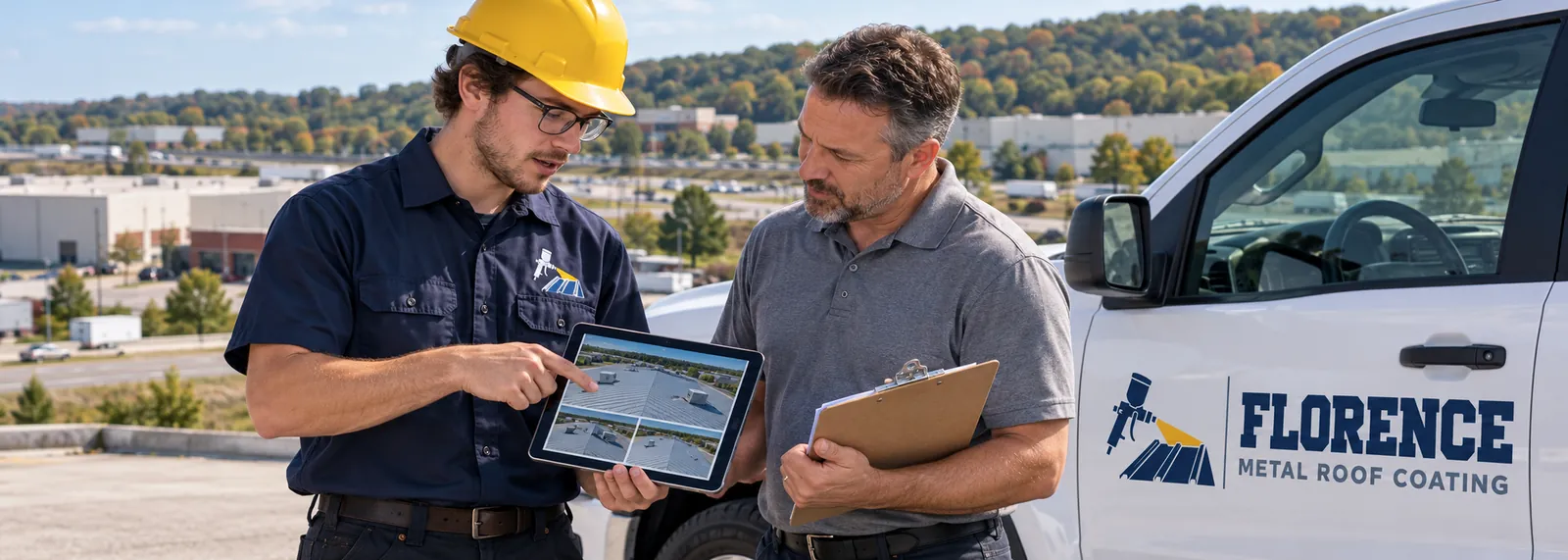
On the river, the coating day starts later and ends earlier, and the permit step starts sooner.
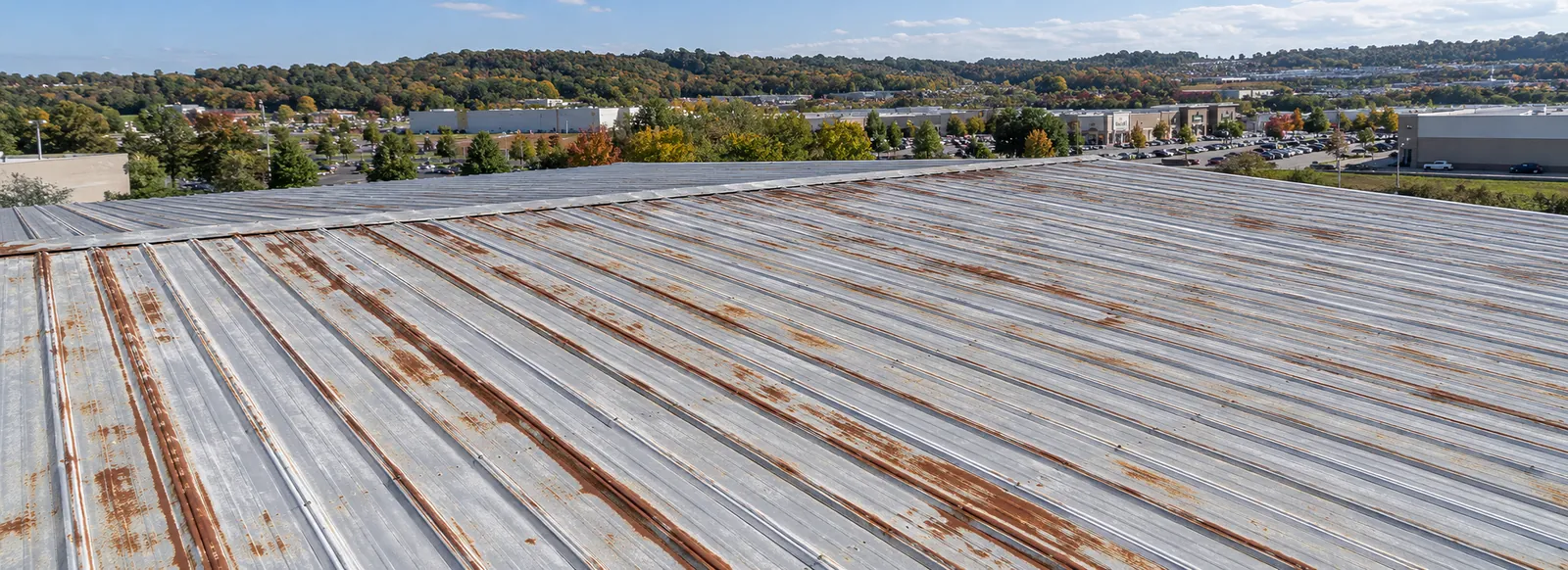
Warsaw sits on the Ohio River, and river fog and heavy dew keep metal roofs wet longer on many mornings. That moisture feeds rust at end laps and slows a coating's cure, so crews start later and wrap up earlier to let each coat set before evening dew.
Gallatin County lists no local building inspector, so commercial construction goes through the Kentucky Department of Housing, Buildings and Construction. When a job includes panel replacement, purlin repair, or foam at the roof edge, the state step goes at the front of the schedule.
Moist air off the Ohio River shows up on Warsaw roofs in six ways that change the prep and the daily schedule.
Panels stay wet well into the morning on foggy days. Coating waits until the steel is dry and warm enough, which shortens the work day.
Humid air inside low buildings condenses under the panels while dew sits on top. End laps rust from both faces and thin quickly.
Galvanized panels kept damp grow powdery white rust. It gets cleaned and primed with a product matched to zinc.
Evening dew lands on coats that are still curing. Work stops early enough for each coat to set before the air cools.
Gallatin County sends commercial construction to the state building department. Panel swaps, purlin repairs, or foam at the edge go on that schedule early.
Churches and community buildings in town keep set hours. Coating days are planned around services and events, with walkways below kept clear.
Four changes Warsaw owners see when a damp metal roof is restored and coated on the right days.
Morning dew sits in end laps and feeds rust from the top while humidity works from below.
Reinforced, coated laps keep the top-side water out of the joint.
Replacing panels on a river-town shop adds tear-off, disposal, and a state permit step.
Coating works over existing panels, and permit questions shrink to any panel or edge changes.
Tear-off disrupts services, business hours, and stock storage below.
Coating goes on above while the building keeps its schedule.
Bare galvanized steel keeps losing zinc to the damp air.
A coated roof can take a fresh compatible coat later, after cleaning.
Five systems we apply on Warsaw buildings, with each roof's moisture conditions deciding between them.
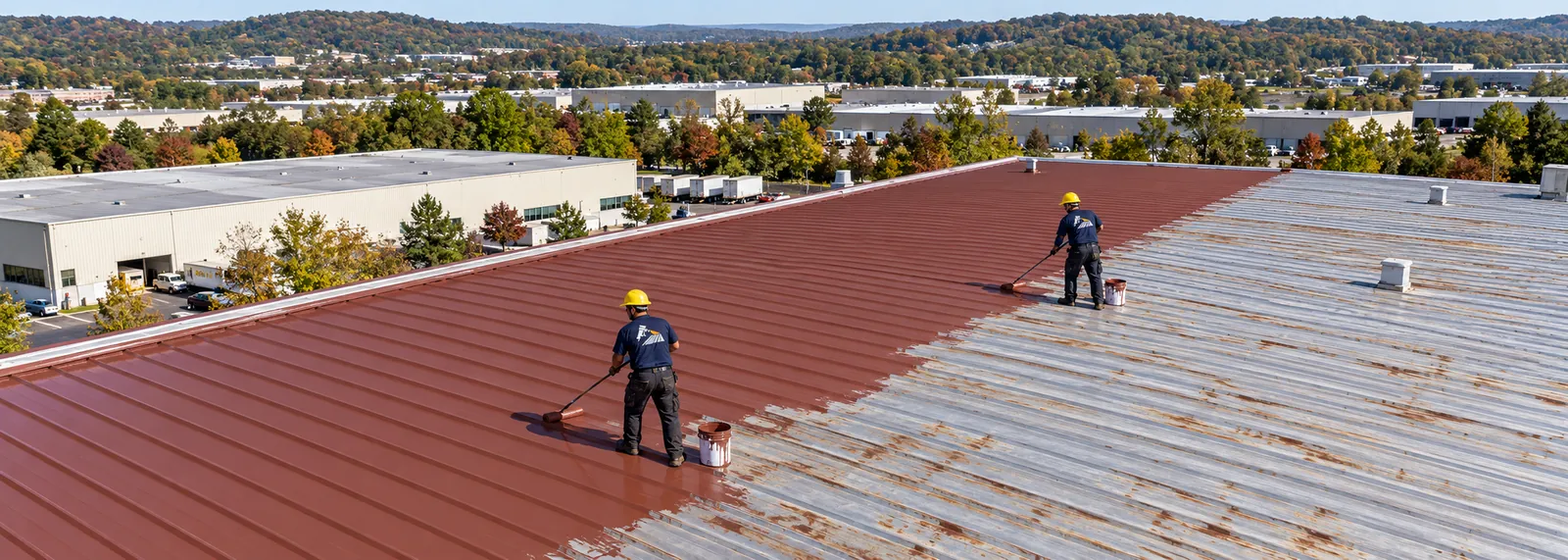
Shops and warehouses with exposed fasteners get screw, lap, and white-rust prep, then a full coat.
Metal roof coating details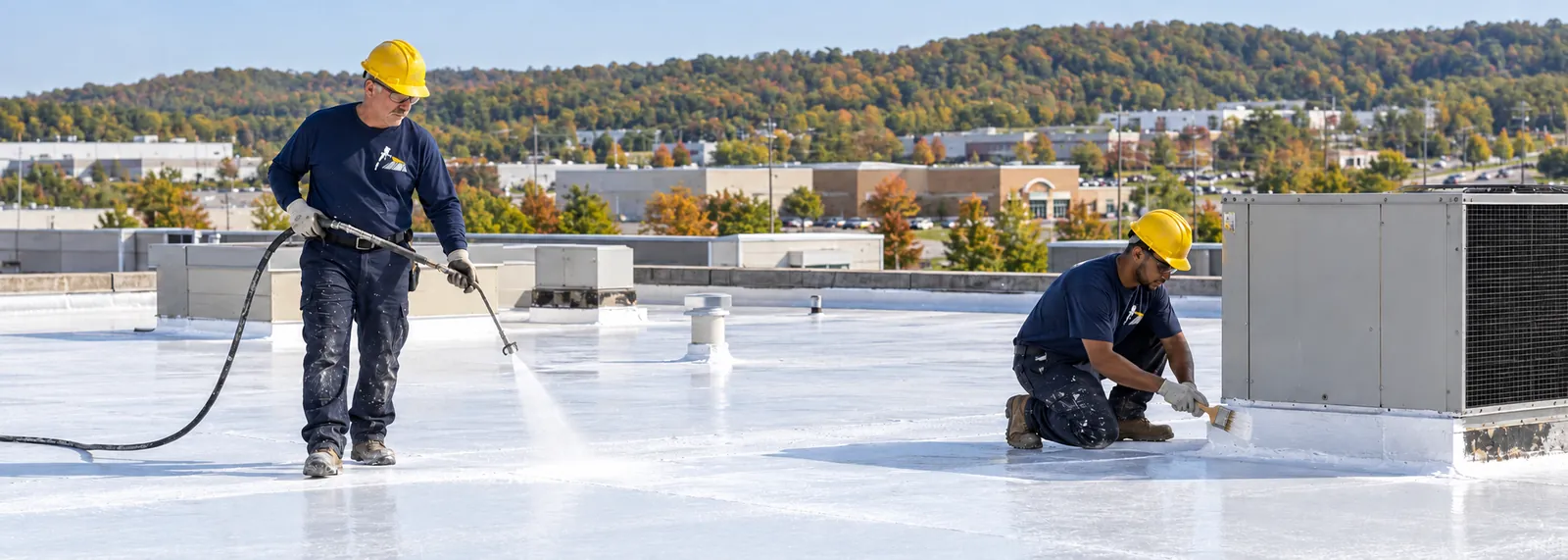
Low-slope roofs that stay damp take silicone, which tolerates cooler, damper days better than acrylic.
Silicone roof coating details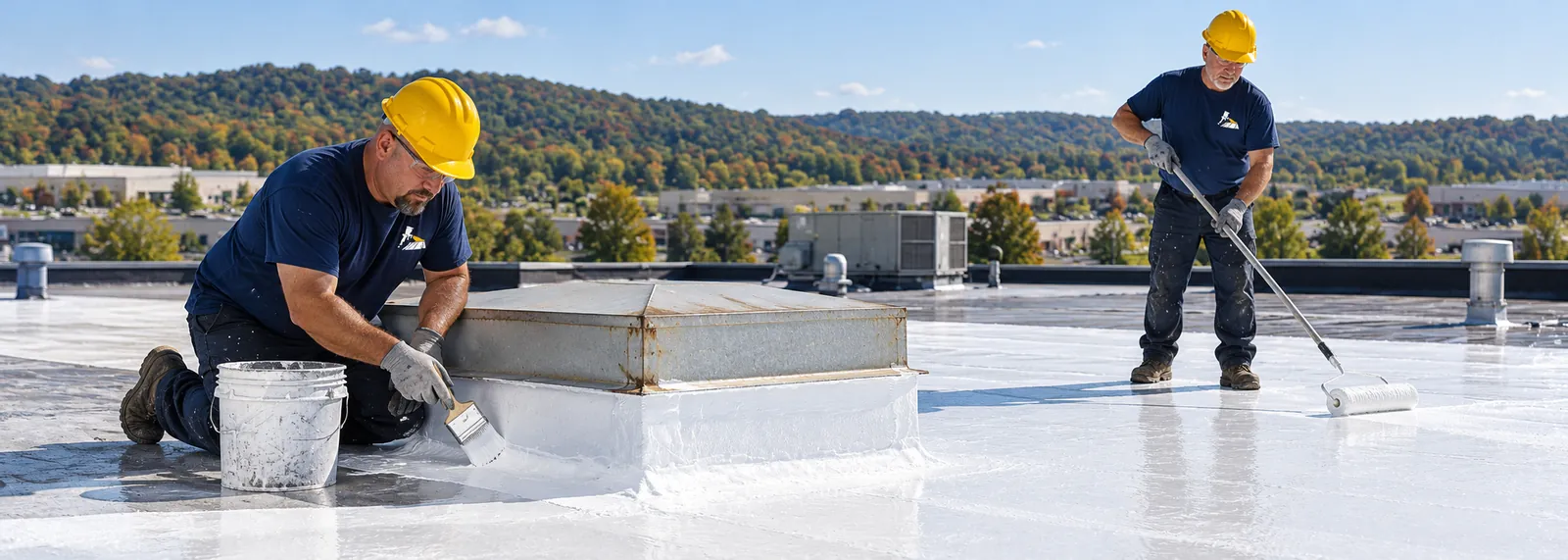
Steeper roofs that dry quickly after the fog lifts can take acrylic in the warmest weeks.
Acrylic roof coating details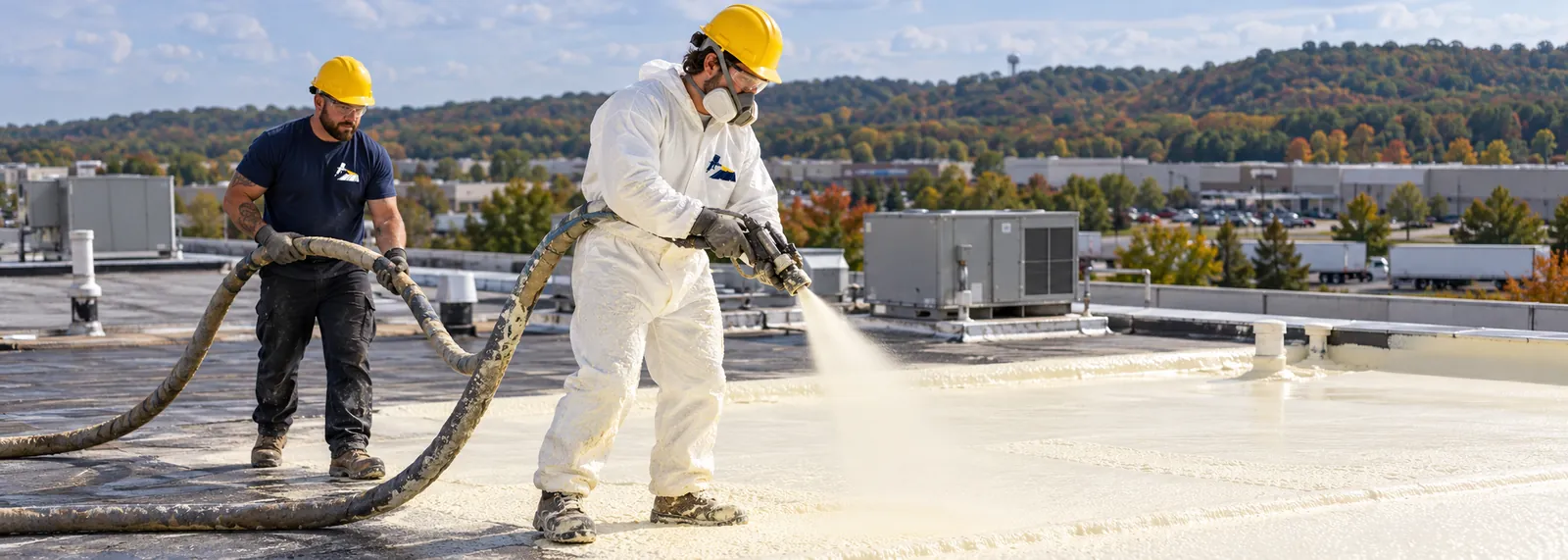
Buildings that drip condensation inside can add foam over the steel to insulate the roof.
Spray foam roofing details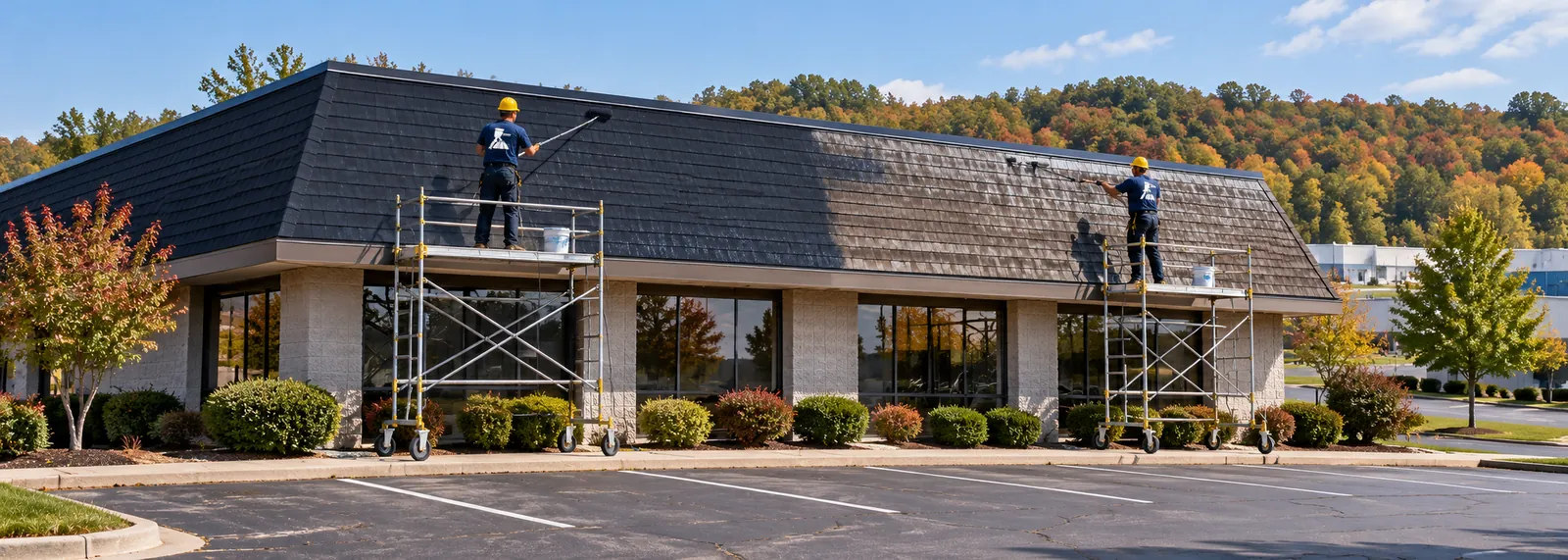
Church and office shingle slopes in town get a condition check before any coating.
Shingle roof coating detailsCall and tell us which side of the building stays damp longest. Shaded, river-facing slopes set the pace for the whole coating schedule.
Five steps with the daily weather check built in, so every coat goes on dry steel.
We check laps from above and below, test screws, grade rust and white rust, and look for condensation inside low buildings near the river.
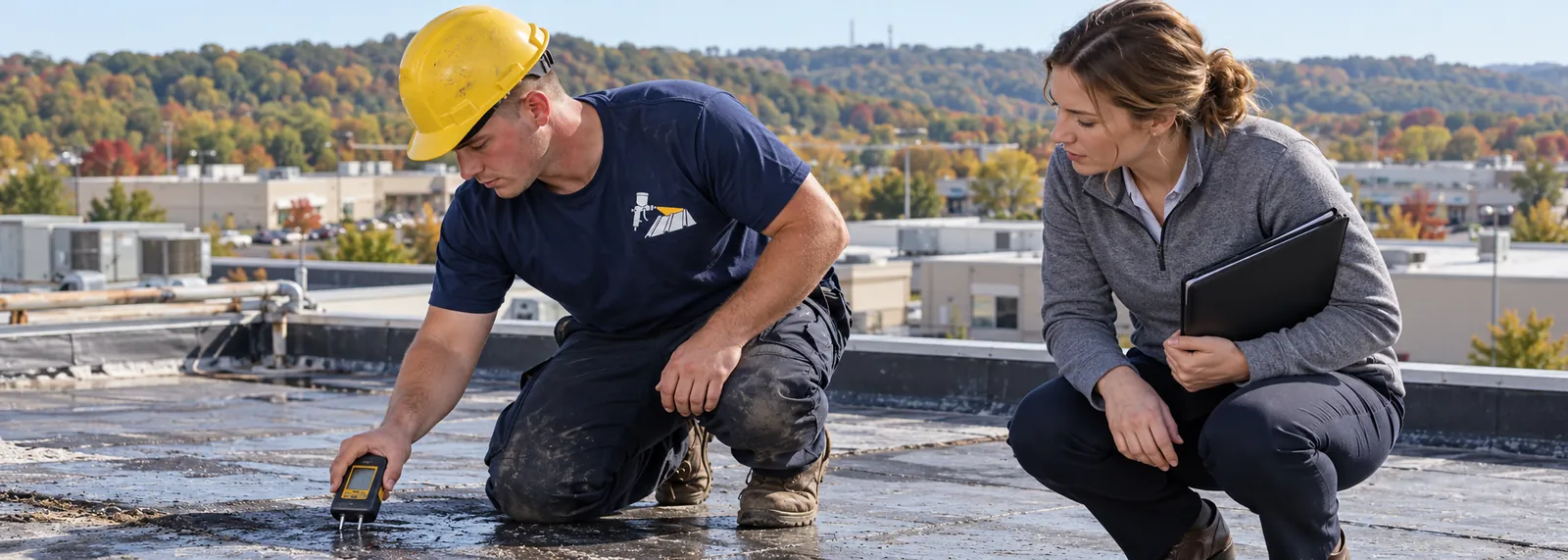
Pressure washing clears dirt and chalk, red rust is brushed to firm steel and primed, and white rust on galvanized panels gets a zinc-matched primer.
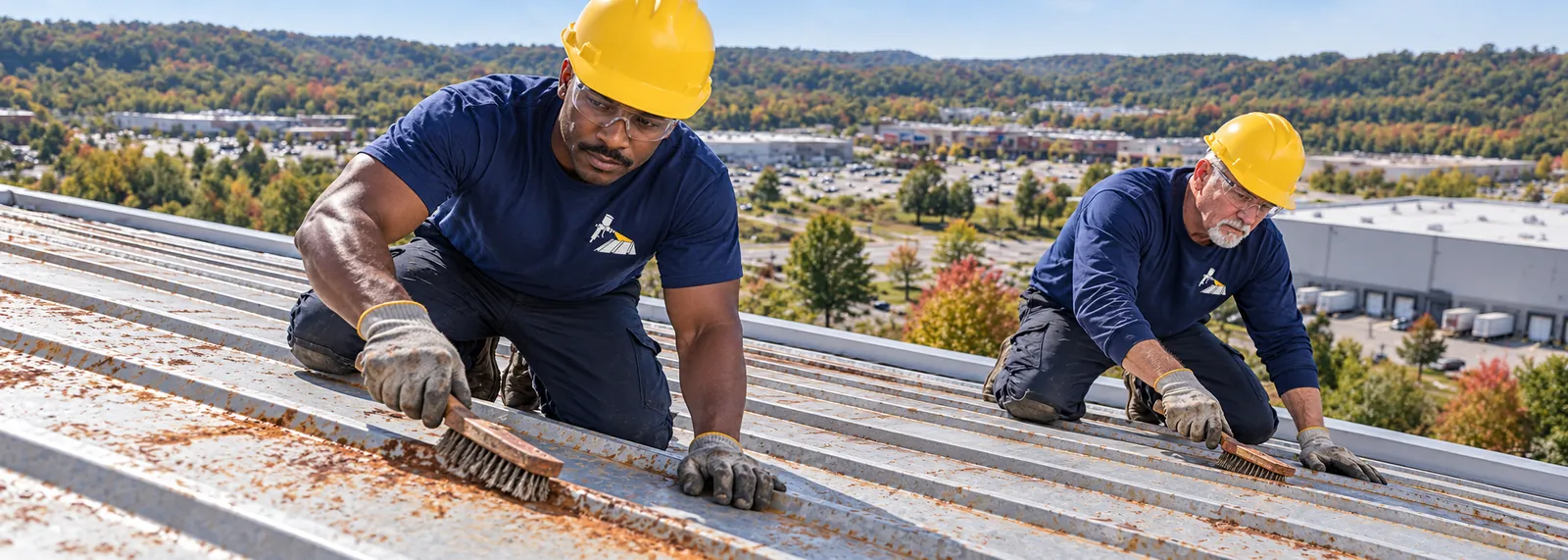
End laps get fabric or tape, failed screws are replaced, and the ridge cap overlap is sealed, all on steel that has dried out for the day.
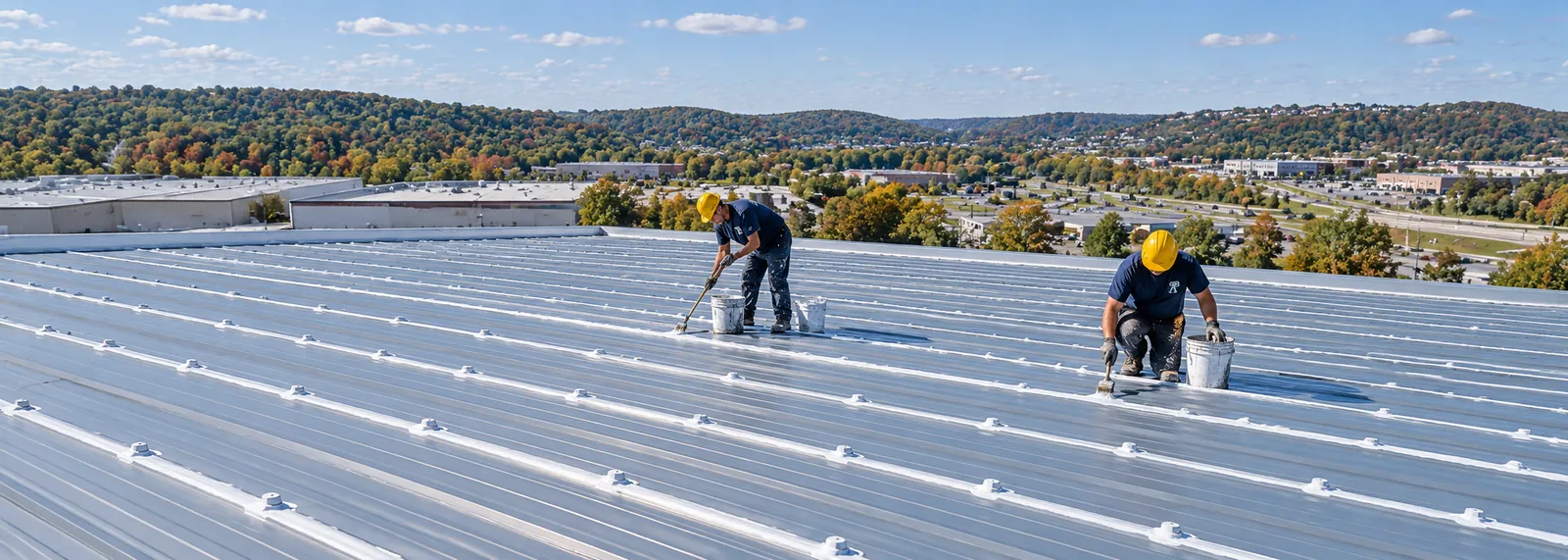
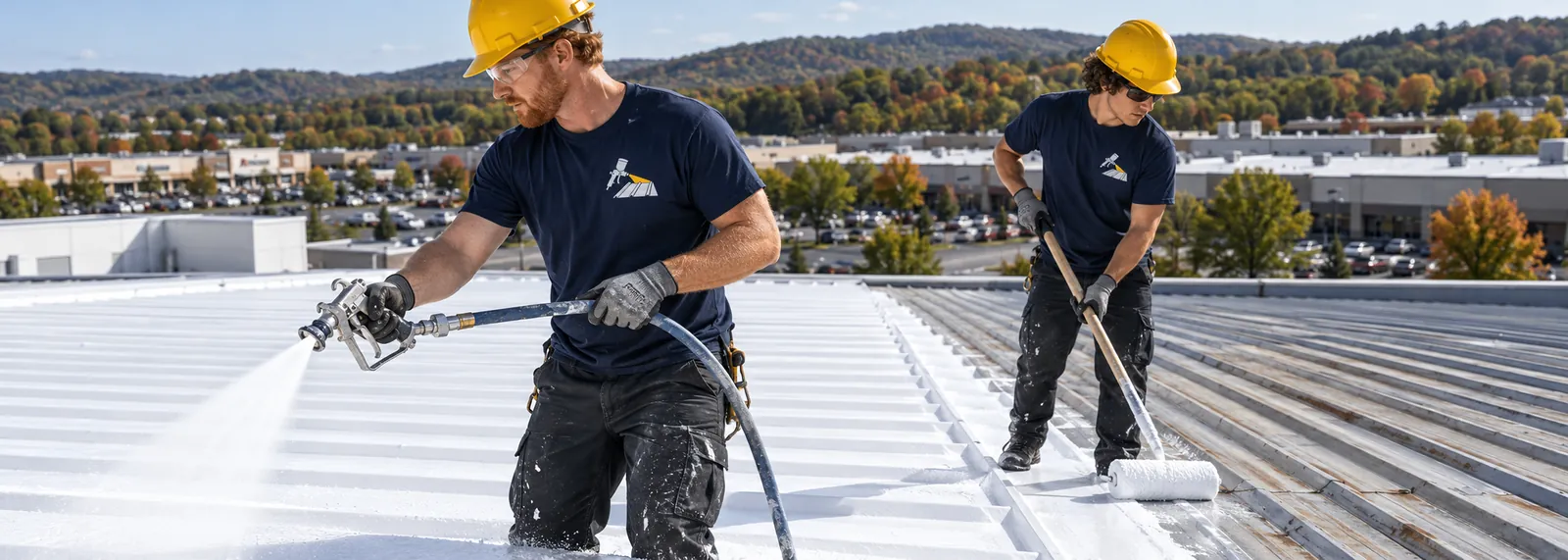
Each coat goes on once the morning dew has burned off and stops early enough to set before evening moisture returns.
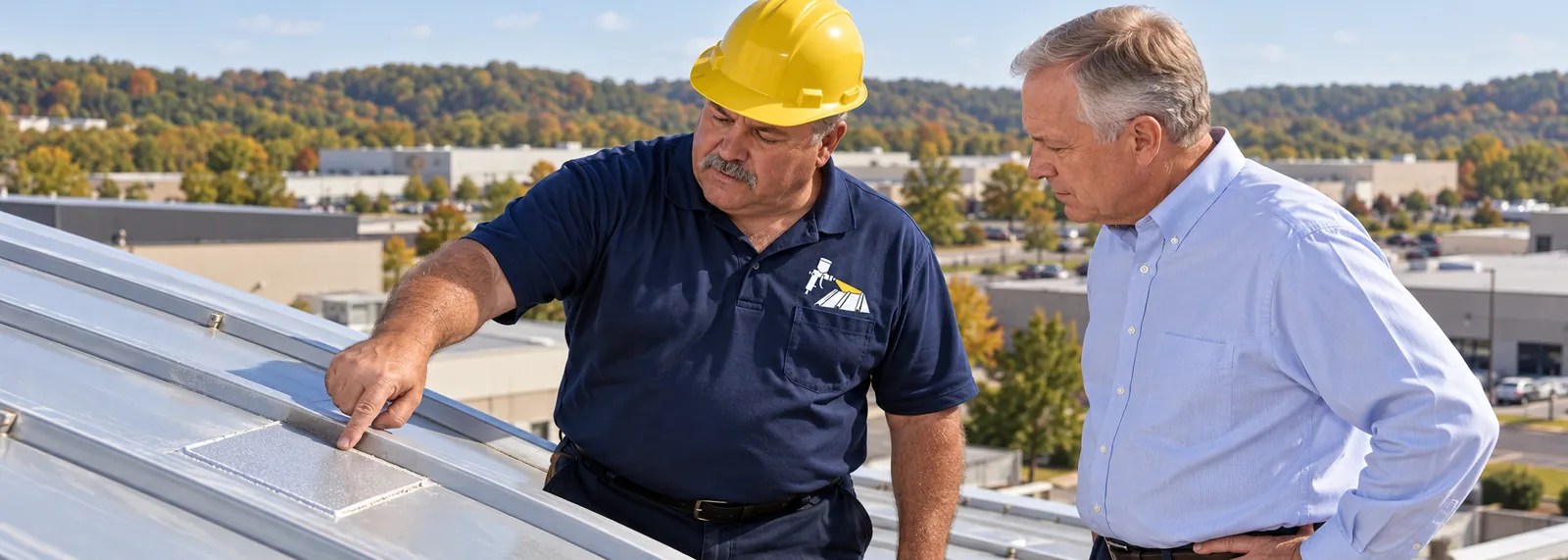
A final walk checks laps, curbs, and gutters, and you receive photos and notes for the building file and any state permit record.
Have a building in one of these towns as well? We coat commercial roofs in every one of them. If yours is elsewhere, call us or send us a message.
| Town | County | What We See On Roofs There |
|---|---|---|
| FlorenceMain Service City | Boone | Warehouses, flex buildings, and retail centers with exposed-fastener roofs, plus tenant changes that bring a county permit and a city fire inspection. |
| Union | Boone | Pole barns, equipment sheds, and shops with open purlins, where condensation rusts the panels from below. |
| Burlington | Boone | Older shop buildings with matching roof and wall panels, rust along the eave line, and gutters pulling loose. |
| Hebron | Boone | Very large logistics and air cargo roofs near CVG, coated in sections around docks and sorting floors. |
Answers for owners of shops, churches, and warehouses in Warsaw.
The Kentucky Department of Housing, Buildings and Construction does, because Gallatin County lists no local building inspector. The county contact sheet names a state building inspector.
For a Warsaw shop, church, or warehouse, contact the state office early when the work includes panel replacement, purlin repair, or foam that changes the roof edge, since state review adds lead time.
River fog and heavy dew keep metal roofs wet longer on many mornings, which feeds rust at end laps and slows coating cure. Crews start later and stop earlier so each coat sets before the evening dew.
Low buildings near the river also hold more humidity inside, so condensation under the panels gets a look from the interior. Owen Electric serves Gallatin County, and co-op members coordinate with it for work near rooftop equipment.
Silicone usually fits better. It tolerates cooler, damper conditions during application and holds up where water lingers, while acrylic needs warm, dry days and nights to cure. Steep roofs that dry fast can still take acrylic in midsummer.
Early fall works on dry stretches, with shorter days on the roof because of morning fog. As nights cool and dew gets heavier, the season winds down sooner on river-facing roofs than on high ground.
Yes. Condensation under the panels in humid buildings can look like a roof leak, so the inspection includes the underside, the purlins, and any stains below before the coating plan is set.
Answer seven questions for a ballpark range, or call to plan the inspection and the state permit step together.
Leave a name and number and we will call you back about your commercial roof.
Or call (859) 204-8080 now