Ponding Behind Units
Rooftop units and their curbs dam water on the uphill side. Dirt rings around the curb show how long it sits, and flashing there takes the most wear.

We apply silicone roof coating to low-slope metal and flat commercial roofs in Florence where water lingers after rain, after the laps, drains, and curbs are sealed.
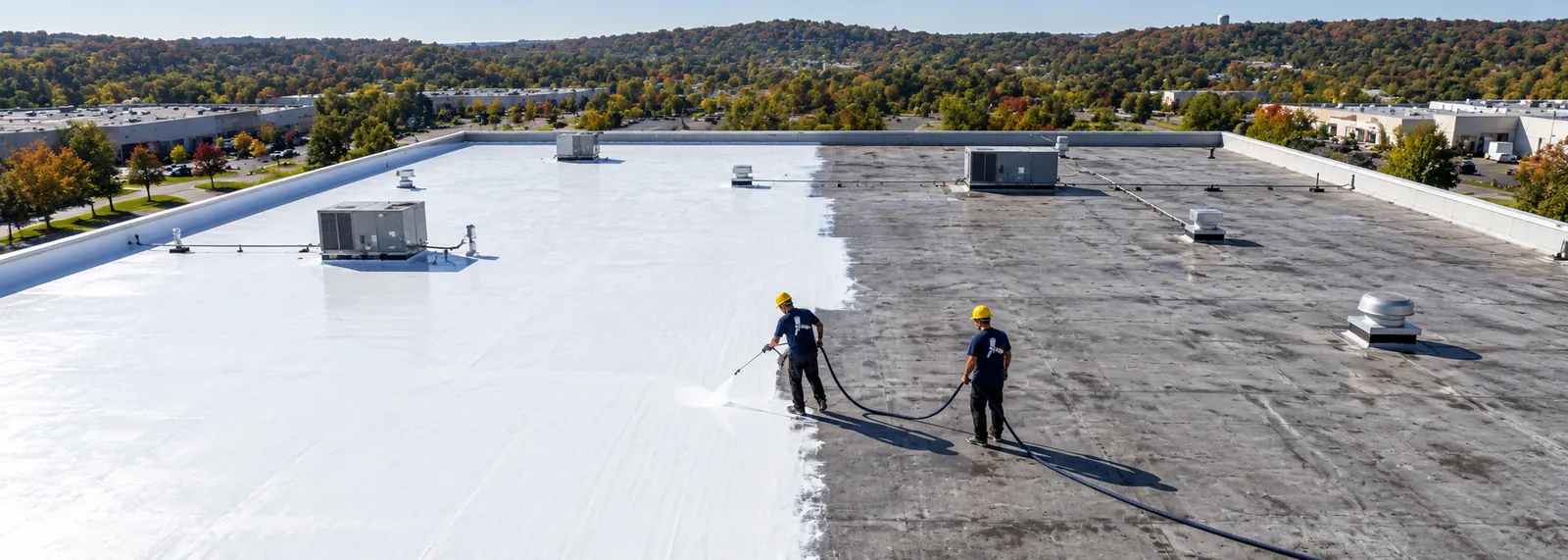
Find your roof on each line. The yellow dot shows where silicone goes straight on, the navy diamond where repairs come first, and the open dot where the roof needs rebuilding.
Water that lingers suits silicone, standing water over low spots gets repairs first, and water sitting for days on a sagging deck calls for rebuilding.
Laps that stay tight take silicone after cleaning, split laps get fabric or tape first, and laps torn apart need new material.
Dry insulation keeps silicone on the table, small wet areas are cut out and replaced first, and saturated insulation across the roof means rebuilding.
Drains that flow get coated around, blocked drains and broken gutters are repaired first, and drains sunk into a failed deck move the job to rebuilding.
Old silicone and bare surfaces take new silicone, peeling acrylic or tar coats come off first, and layers too thick to remove push toward replacement.
Drainage and adhesion tests on your roof decide the final answer.
Low-slope roofs hold water in predictable places. These six spots get checked, repaired, and sealed before silicone goes down.
Rooftop units and their curbs dam water on the uphill side. Dirt rings around the curb show how long it sits, and flashing there takes the most wear.
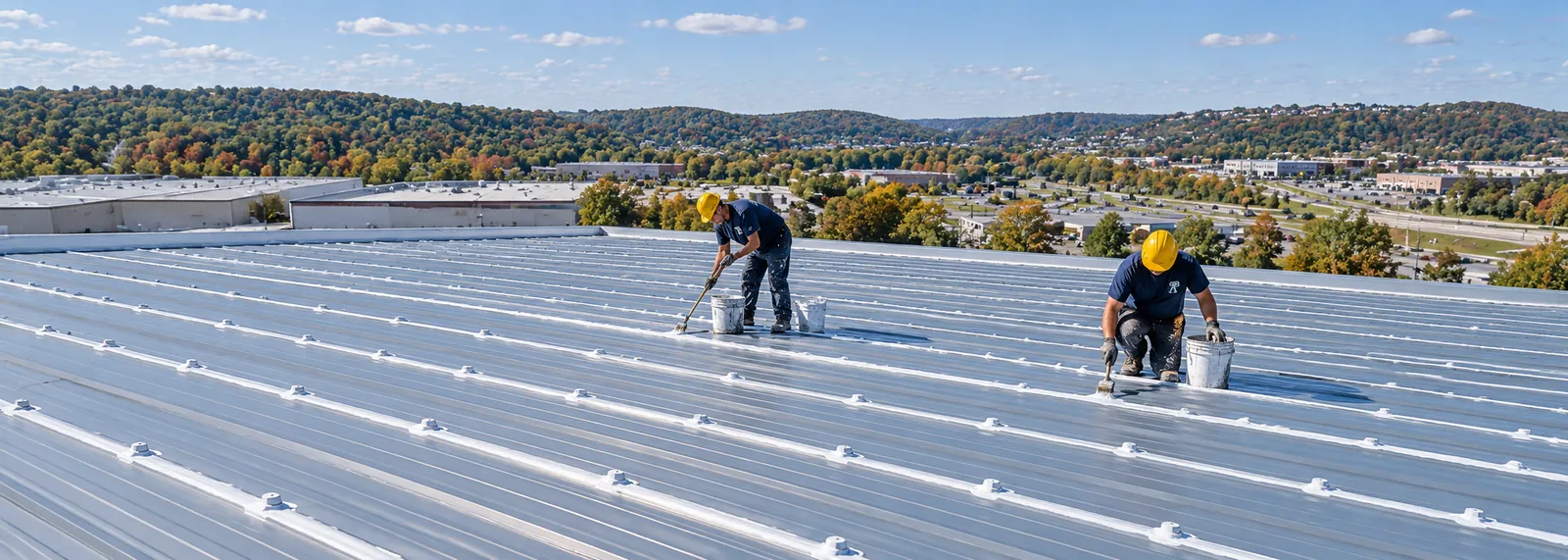
On low-slope metal, end laps sit nearly flat, so water wicks between the sheets. Fabric or seam tape goes over them before the silicone base coat.
Debris in gutters and scuppers backs water onto the roof edge. Clearing them and sealing their joints comes before any coating work starts.
Asphalt and tar patches can stain silicone from below. A blocking primer or removal stops that brown bleed from showing through the new white coat.
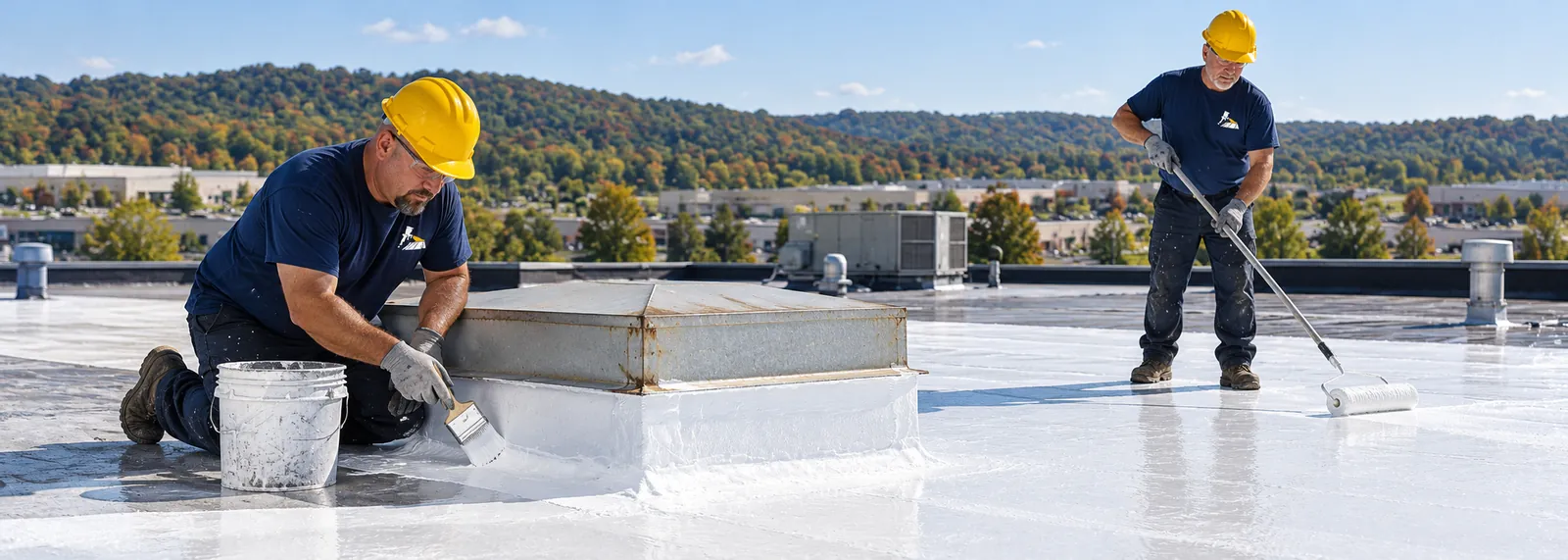
Every pipe, conduit, and vent through the deck gets its own flashing. Cracked boots are replaced, and the joint gets reinforced before the field coat.
Silicone holds more airborne dirt than acrylic, which dulls the white roof over time. Planned rinses keep the surface brighter and let you spot damage early.
Silicone goes on in a few setups on Florence low-slope roofs. The surface underneath decides which one fits.
| Setup | Goes Over | Prep Before Silicone | Recoat Path |
|---|---|---|---|
| Silicone over metal panels | Low-slope R-panel and standing seam | Rust primer, lap fabric, screw sealant | More silicone after cleaning |
| Silicone over single-ply | Aged TPO or EPDM with dry insulation | Cleaning, seam repair, adhesion test | More silicone after cleaning |
| Silicone over built-up or modified | Asphalt roofs with the gravel removed | Blocking primer against bleed-through | More silicone after cleaning |
| Silicone over spray foam | Foam roofs needing a new topcoat | Cleaning and foam repairs | More silicone after cleaning |
Four results Florence owners see when silicone goes onto a low-slope roof that passed the moisture check.
Acrylic and bare membranes soften or wear where water sits after storms.
Silicone keeps its film under lingering water at curbs, laps, and low spots.
A new low-slope roof means removing membrane or panels and replacing wet insulation.
Silicone goes over the existing surface, with repairs limited to the areas the inspection marks.
Tear-off work brings open roof sections, noise, and dumpsters to the building.
Spray work moves zone by zone on top of the roof while staff and stock stay below.
Some coatings wait for warm nights before they can cure.
Silicone tolerates cooler spring and fall days better, which opens up more work days.
Call us and describe where water sits and for how long. A puddle behind one unit and a pond across a whole bay call for different repairs.
Five steps, with drainage and seam work done before the first pass of silicone.
Moisture readings across the field, a look at every drain and scupper, and an adhesion test on the existing surface tell us whether silicone will bond and stay dry beneath.

Gutters, scuppers, and drains are cleared first so water leaves the roof. A pressure wash then removes dirt, chalk, and loose material from panels or membrane.
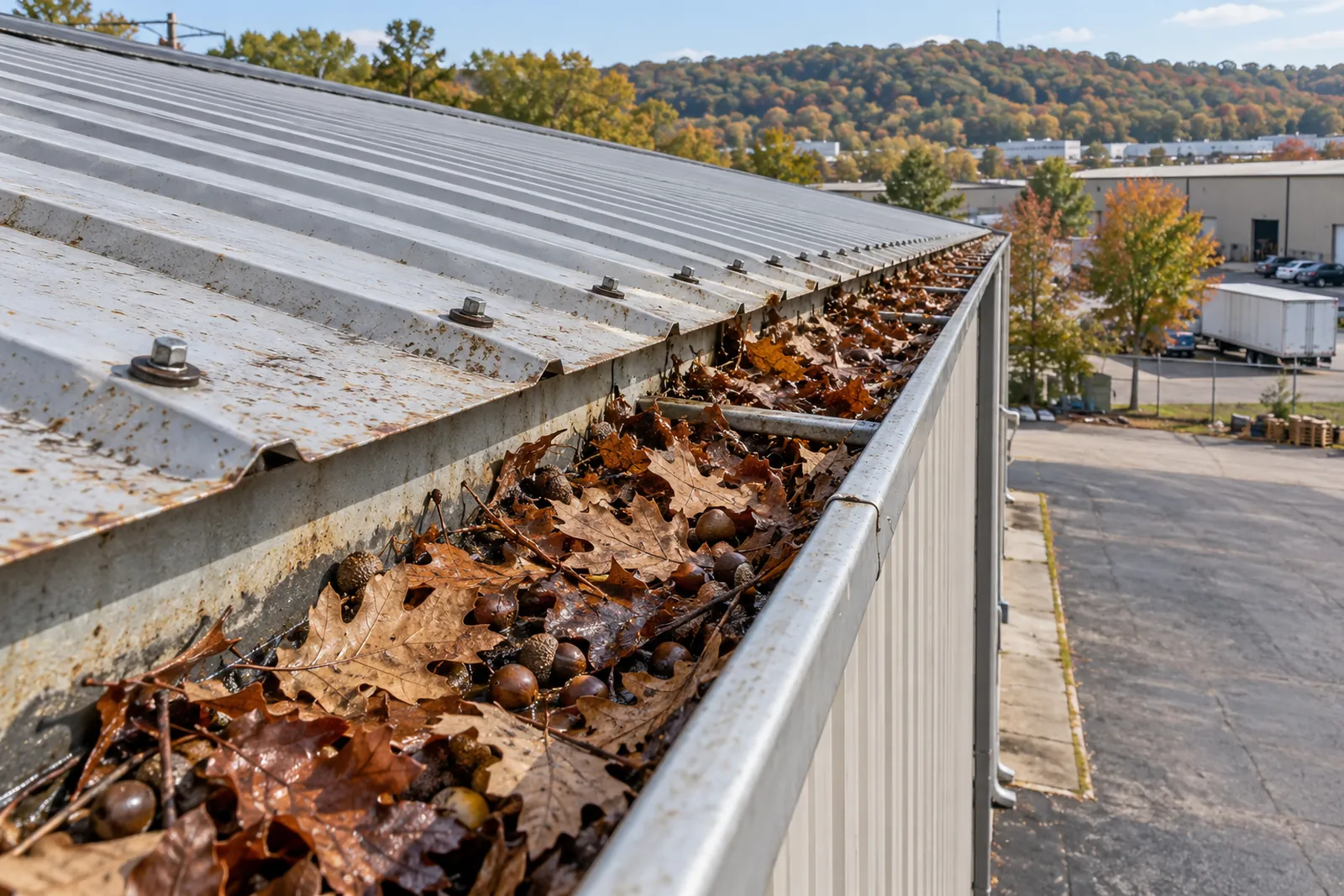
Polyester fabric set in base coat, or butyl seam tape pressed onto clean steel, goes over laps, end laps, and joints that stay wet.
Unit curbs, pipe boots, and vents get flashing repairs and reinforced coating at their joints, the places silicone works hardest on a flat roof.
Silicone goes on by spray or roller to the thickness on the product sheet. Crews check the forecast that morning and keep rain off the fresh coat.
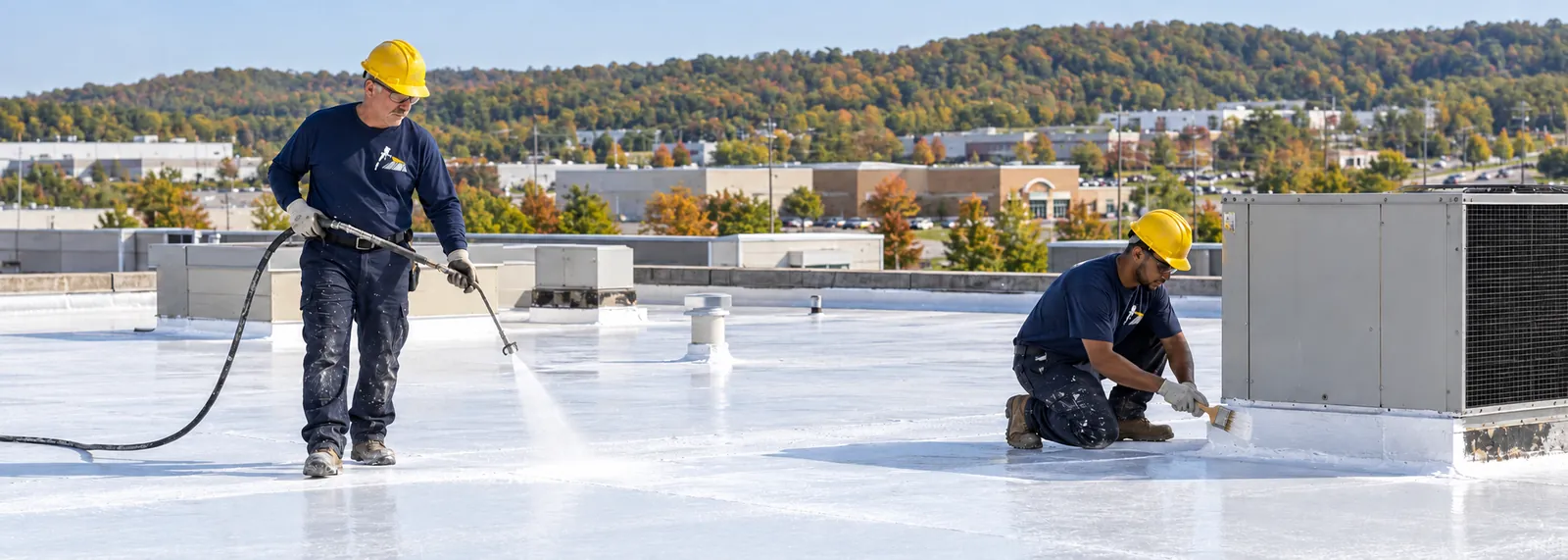
Other systems we apply on Florence roofs with different drainage or insulation needs.
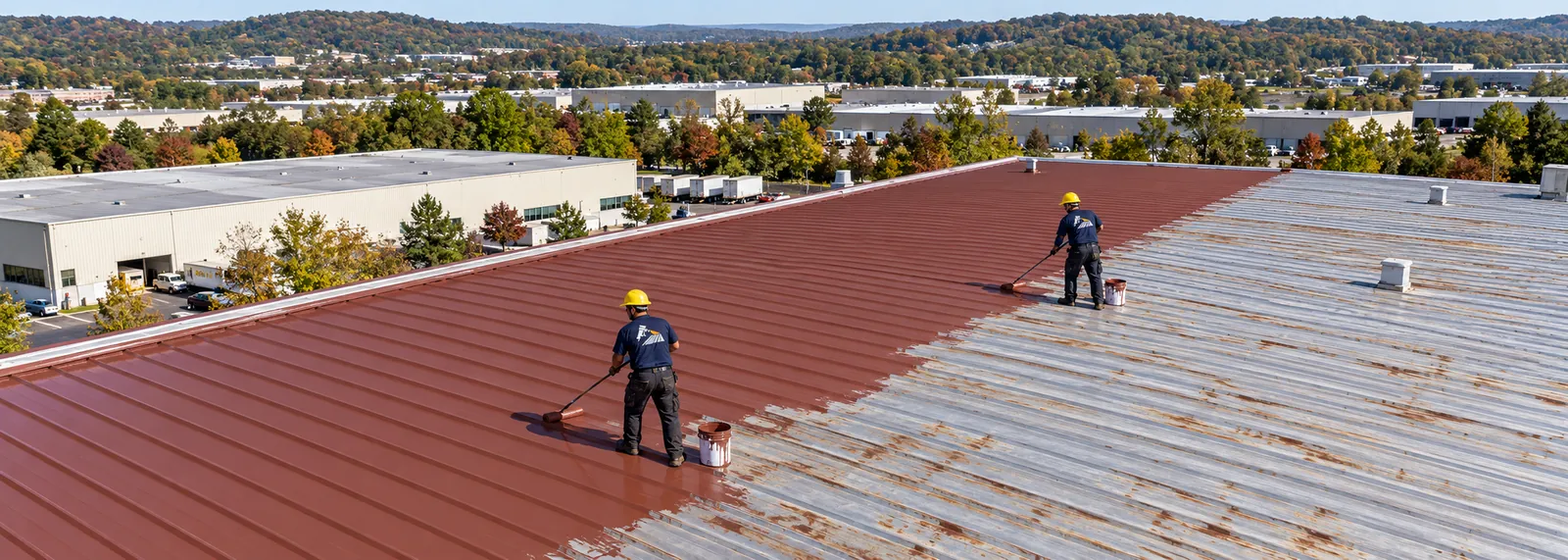
Steep or pitched panel roofs that drain fast still need the same screw and lap work, then a coating matched to their slope.
Metal roof restoration in Florence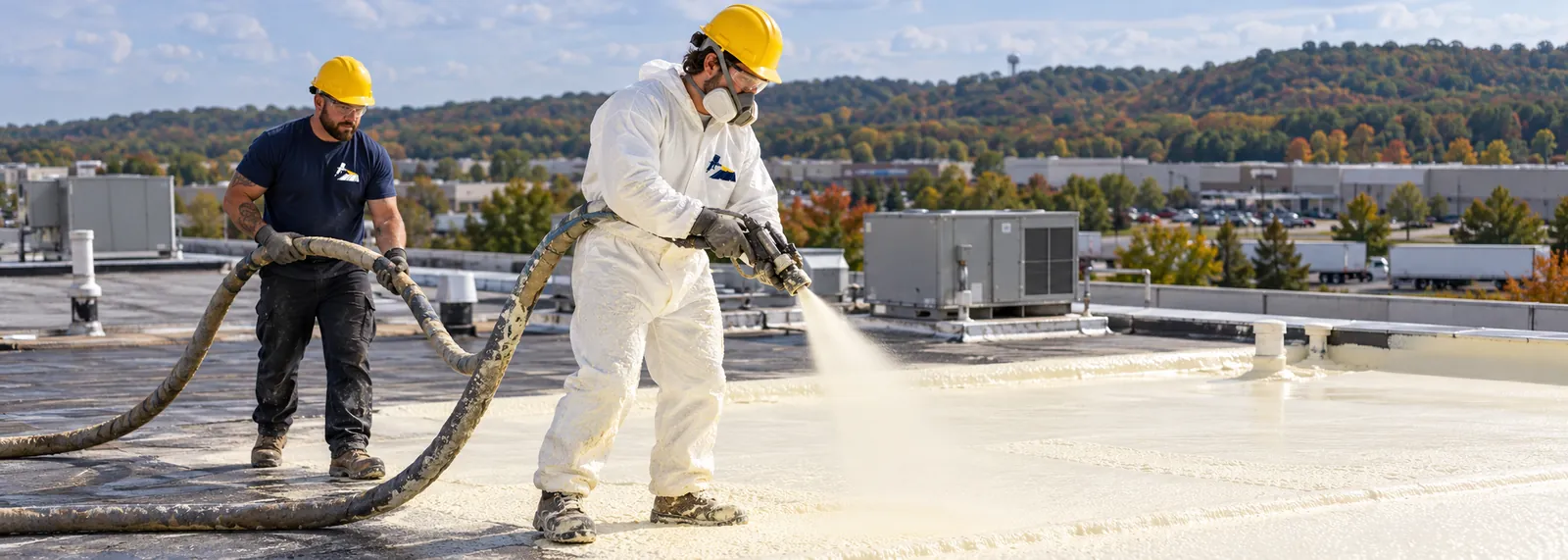
Low spots that hold water can be built up with foam to move it toward drains, then sealed with a silicone topcoat.
Foam to fix low spots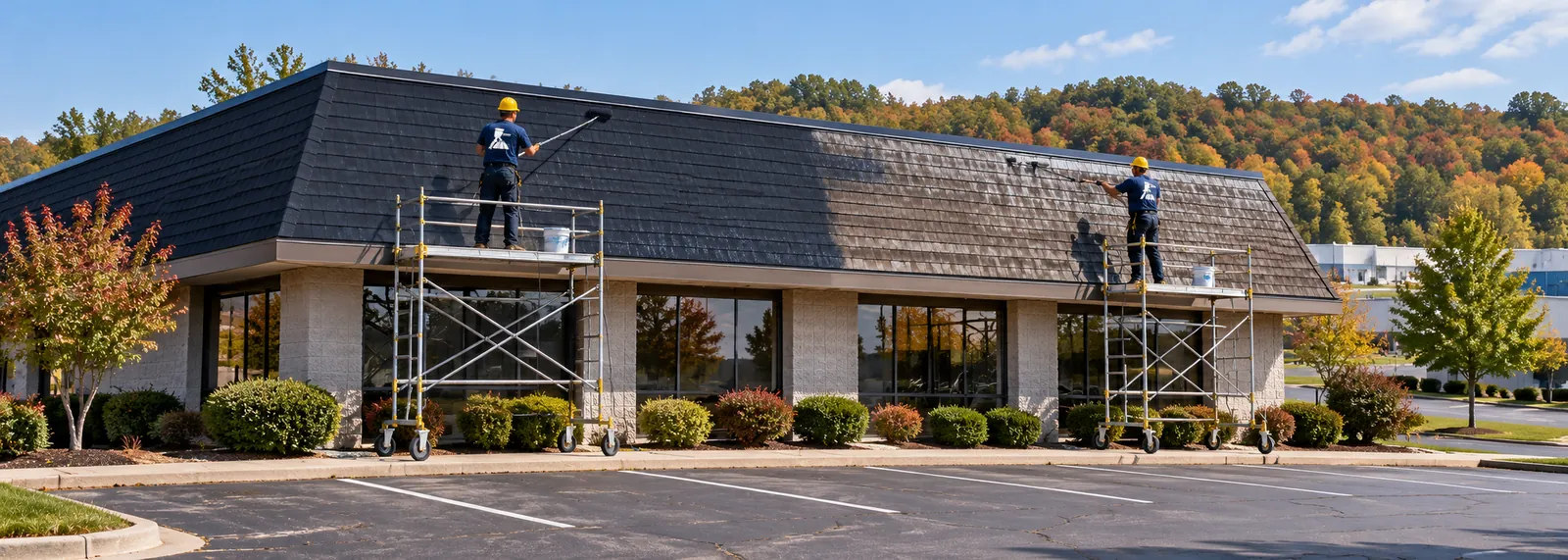
Buildings with a flat main roof often have shingle slopes on the front, and those get their own coating check.
Coating commercial shingle roofsAnswers about silicone on Florence low-slope and flat roofs.
They get reinforced first, since water wicks between overlapping sheets and a plain coat bridges those joints poorly. End laps cross the slope and hold the most water, so they get the most attention.
The joint gets polyester fabric in base coat, butyl or seam tape on clean steel, or tooled mastic around lap screws. Once it cures, the silicone covers it.
Silicone wins where water ponds or lingers, and acrylic wins on roofs that shed water fast and need a lower material cost. Both bond to primed steel, and both come in white.
Acrylic recoats easily with more acrylic, while silicone takes only silicone later. Silicone also picks up more dirt, so the white dulls sooner.
Late spring through early fall is the main window, and silicone stretches it a little at each end because it handles cooler, damper days better than acrylic.
Rain and heavy dew still set the daily schedule. Each morning crews check the forecast, the steel temperature, and the dew point before spraying the roof.
Often, after testing. Acrylic that still bonds well is cleaned and primed, then silicone goes over it; acrylic that peels or powders comes off first. An adhesion test patch on your roof settles it before the full job.
Wet silicone is slick underfoot, more than bare steel, so walk pads and marked paths go in around units and hatches. Service techs who visit the roof often should know where those paths run.
Coating seals the roof beneath a pond, yet the pond itself stays. When it comes from a sagging deck or a blocked drain, that gets fixed first, or foam is built up to move water toward the drain.
Answer seven short questions for a ballpark range on your low-slope roof, or call to set up a drainage and moisture check.
Leave a name and number and we will call you back about your commercial roof.
Or call (859) 204-8080 now