Backed-Out Screws
Heat and cold cycles push panels back and forth until screws work loose. Each one gets checked; stripped holes take a larger-diameter screw with a new washer.

We restore and coat commercial metal roofs in Florence, working screw by screw and lap by lap. Rust gets graded and primed before the roof coating goes on.
Find your roof's condition on each line. The yellow dot marks where coating alone works, the navy diamond where restoration comes first, and the open dot where new panels win.
Light surface rust is coated after priming, rust at laps and edges is restored first, and holes through the steel call for new panels.
Grip that still bites only needs sealant on the head; stripped holes take oversize screws during restoration; screws spinning across the roof point to purlin or panel work.
Tight end laps are coated over, separated laps are reinforced with fabric or tape, and laps rusted apart need replacement sheets.
Insulation that stays dry and full depth keeps coating on the table; soaked or crushed insulation means the panels come off.
Known leak spots fit coating, many leaks along laps fit restoration, and water coming in everywhere points to replacement.
A screw test and moisture readings on your roof set the final answer.
Coating seals whatever is under it. These six details get repaired first so the coat bonds to steel that will hold it.
Heat and cold cycles push panels back and forth until screws work loose. Each one gets checked; stripped holes take a larger-diameter screw with a new washer.
Side laps run up the slope where two panel edges overlap. When stitch screws loosen, the lap gaps and wind-driven rain runs straight in along the rib.
Panel ends at the eave and at end laps stay wet longest. Rust there gets ground back to firm steel and primed, and holes get a metal patch.
Galvanized panels form a white, powdery corrosion where water sits. It needs its own cleaning and a primer matched to zinc before any topcoat.
The ridge cap overlaps the top of every panel. Closures behind it shrink and its screws loosen, so it gets the same seal and screw work as the laps.
Roof cement and asphalt patches from past leak calls block adhesion. They get scraped off or sealed with a compatible primer so the new coat bonds.
Metal roofs in Florence can take more than one coating system. Slope, drainage, and how you want to recoat later set the choice.
| Option | Best On | What Goes On First | Recoat Later With |
|---|---|---|---|
| Acrylic system | Pitched panels that drain fast | Rust primer, lap fabric, acrylic base | Acrylic after cleaning |
| Silicone system | Low-slope panels and wet gutters | Rust primer, seam tape, silicone base | Silicone only |
| Urethane base with acrylic or silicone top | Roofs with foot traffic around units | Urethane at seams, screws, and walkways | The topcoat's own family |
| Spray foam plus coating | Buildings that need insulation | Clean, dry steel and flute fill | Coating topcoat over the foam |
Four changes Florence owners can expect once a metal roof is restored and coated. Each one assumes the panels passed the inspection first.
New steel, insulation, and tear-off labor all land on the same invoice.
Your money goes into screws, lap seals, primer, and coating on panels you already own.
Removing panels exposes inventory, machinery, and offices to weather.
Crews stay on top of the existing roof while the building keeps shipping and working.
Old panels, fasteners, and wet insulation leave by the dumpster load.
The panels stay in service, and only failed screws and small patches come off.
Bare panels keep rusting at laps until replacement is the only choice.
A coated roof can be cleaned and given a fresh compatible coat when it wears.
Call and tell us where the drips land. Leaks in a straight line under the roof usually follow a screw row or an end lap, and that shortens the inspection.
Five steps on every exposed-fastener roof, with the screw and lap work done by hand before the coating rig is set up.
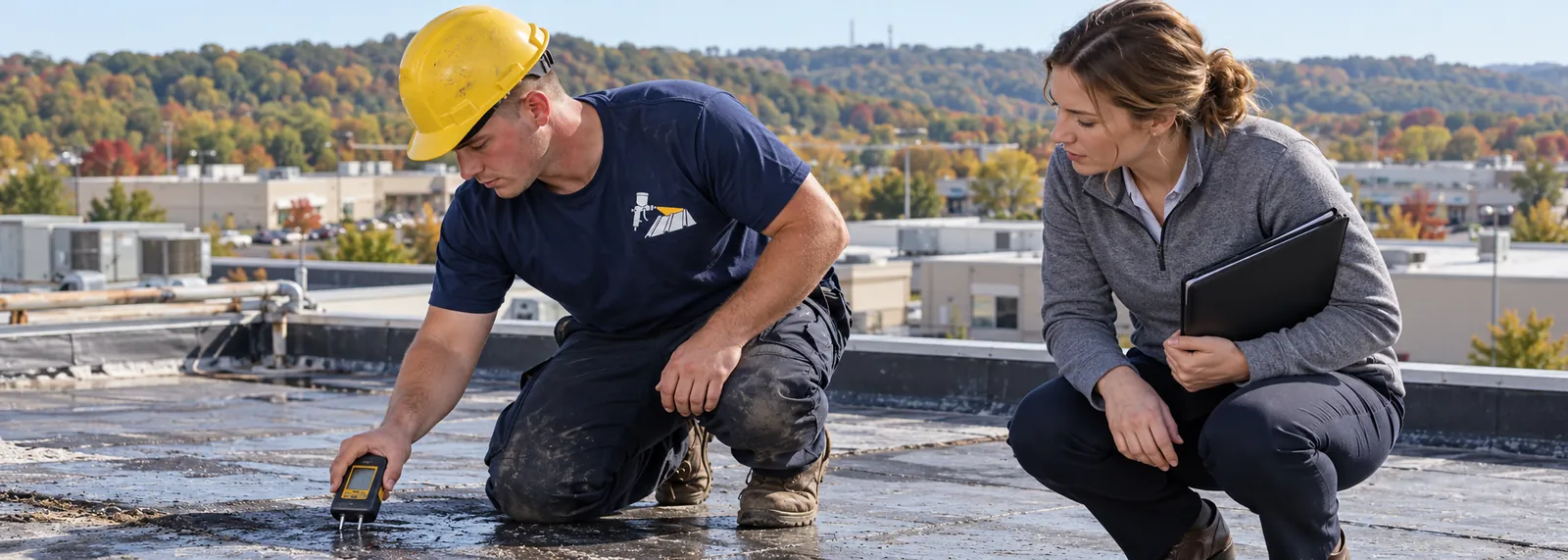
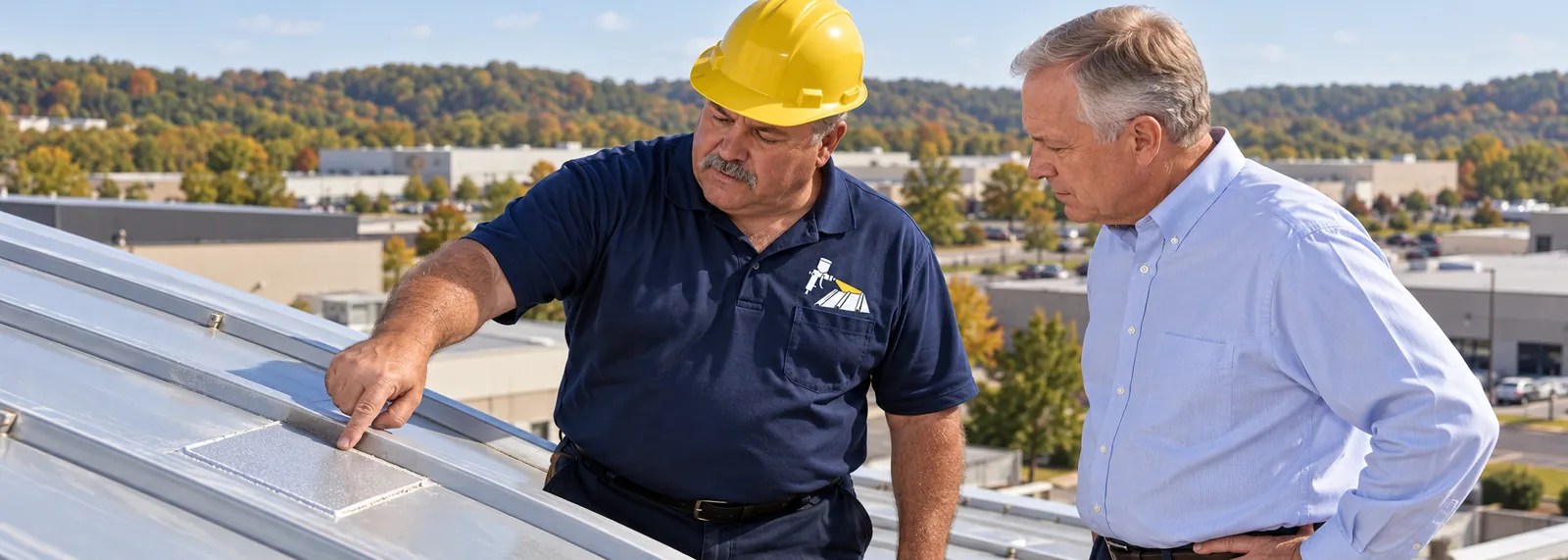
We test screws by hand, open suspect laps, grade rust by area, and take moisture readings over the insulation. You get photos marked with what needs repair and where.
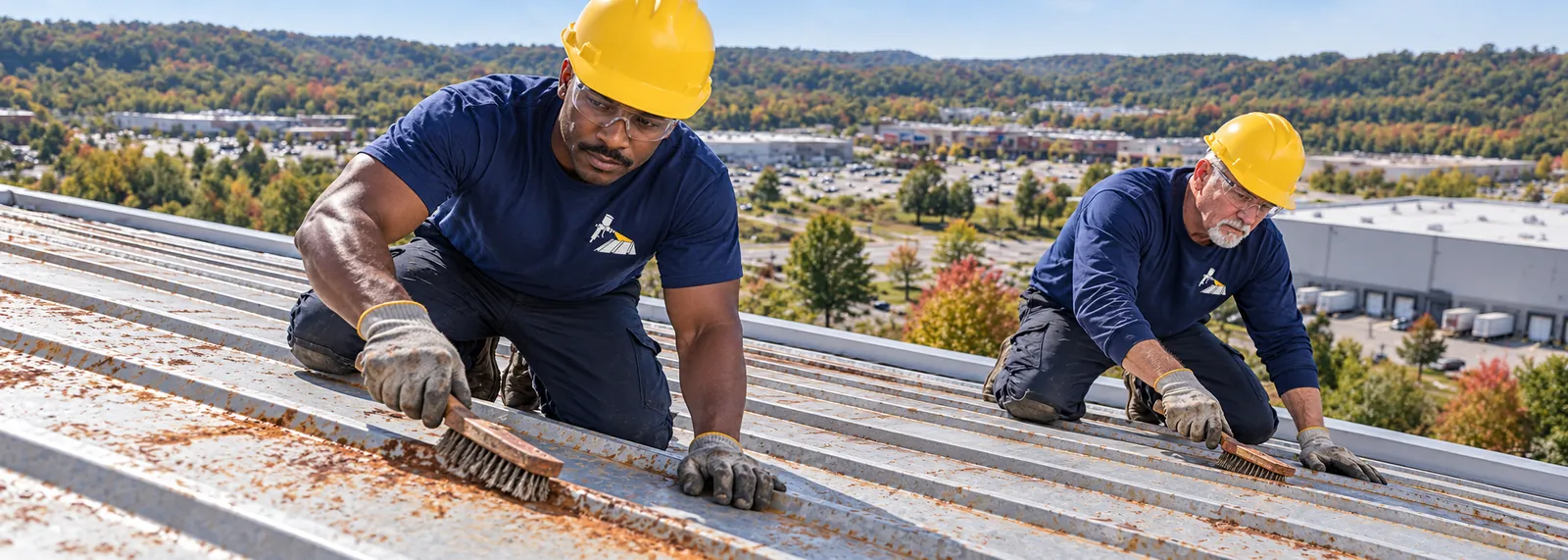
Pressure washing removes dirt and chalked paint. Then flaking rust is brushed or ground back to tight rust or bare steel at every lap, eave, and gutter.
Every failed screw comes out for an oversize screw with a new washer. Tight screws get a dab of sealant, so all fastener heads are covered twice.
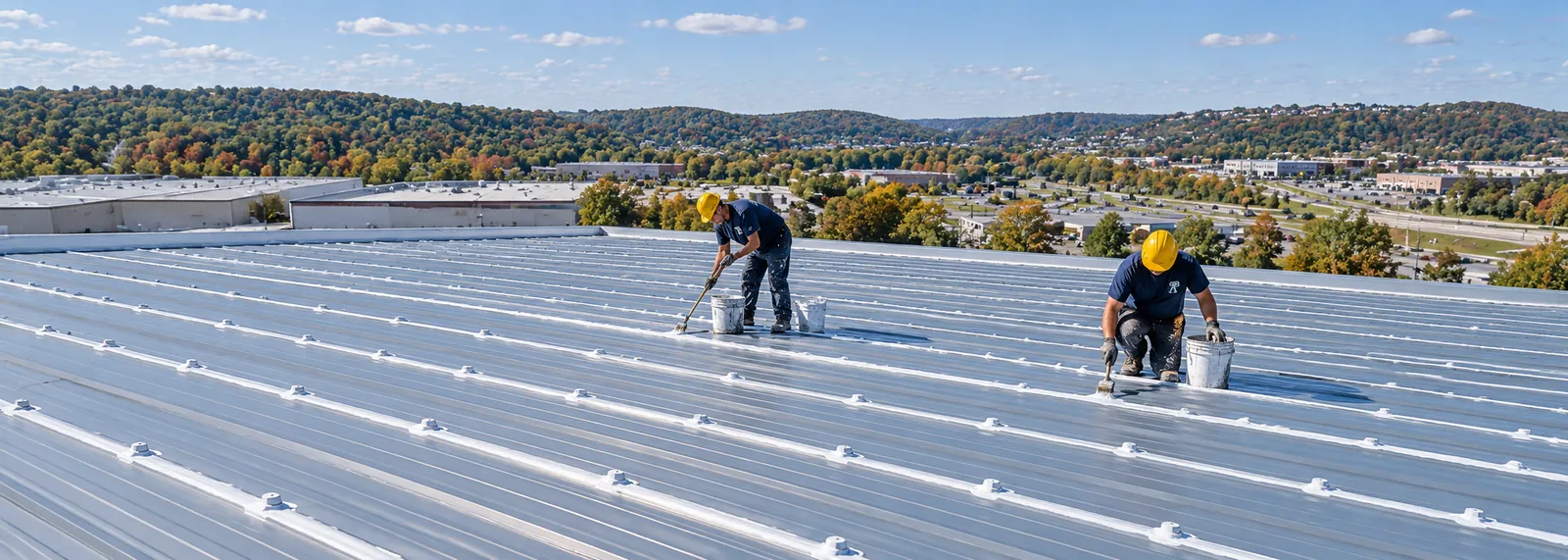
Fabric set in base coat, butyl tape, or tooled mastic goes over side laps, end laps, and the ridge cap overlap, then cures before the field coat.
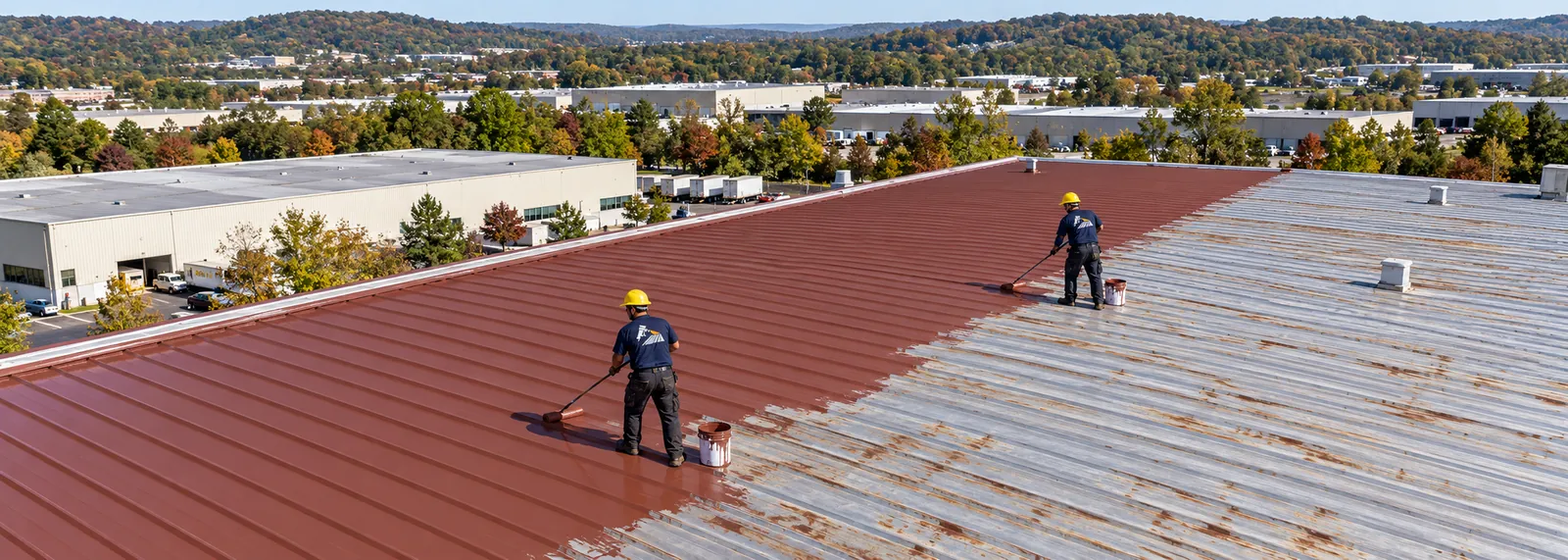
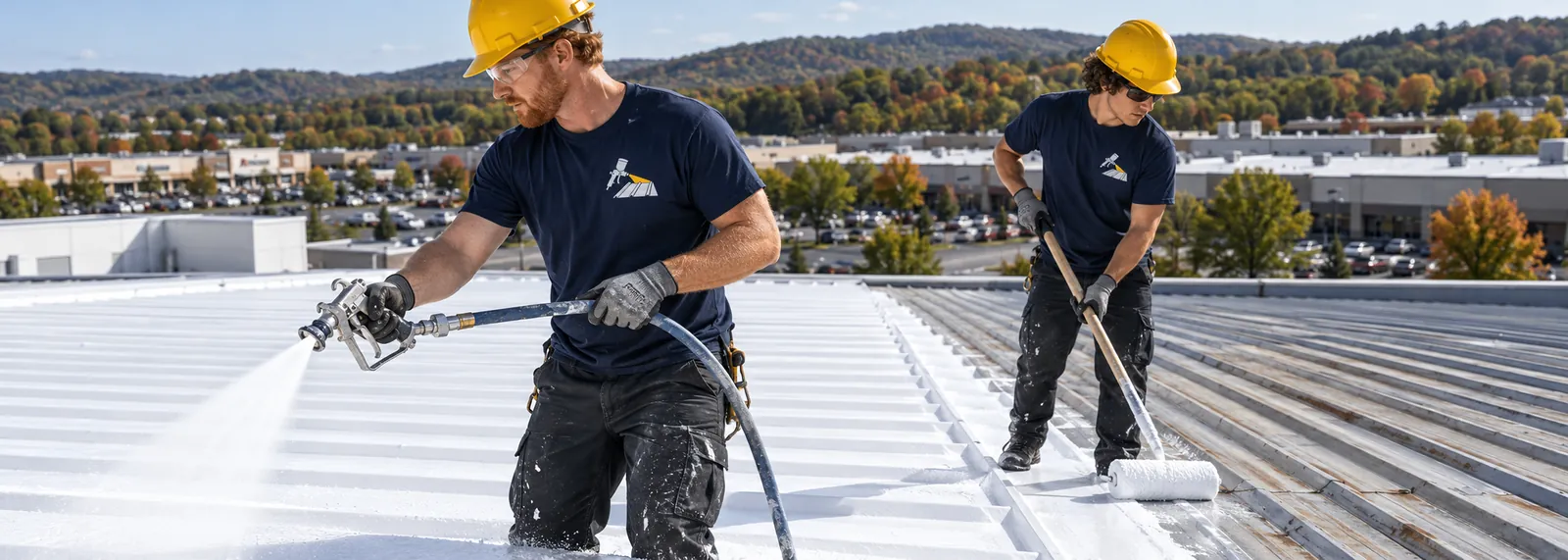
Primer goes on rust spots, then the base and top coats are sprayed or rolled to the thickness on the product sheet, covering panels, screws, and laps alike.
Metal roofs often pair with another system. Here is when each one comes up on a Florence metal building.
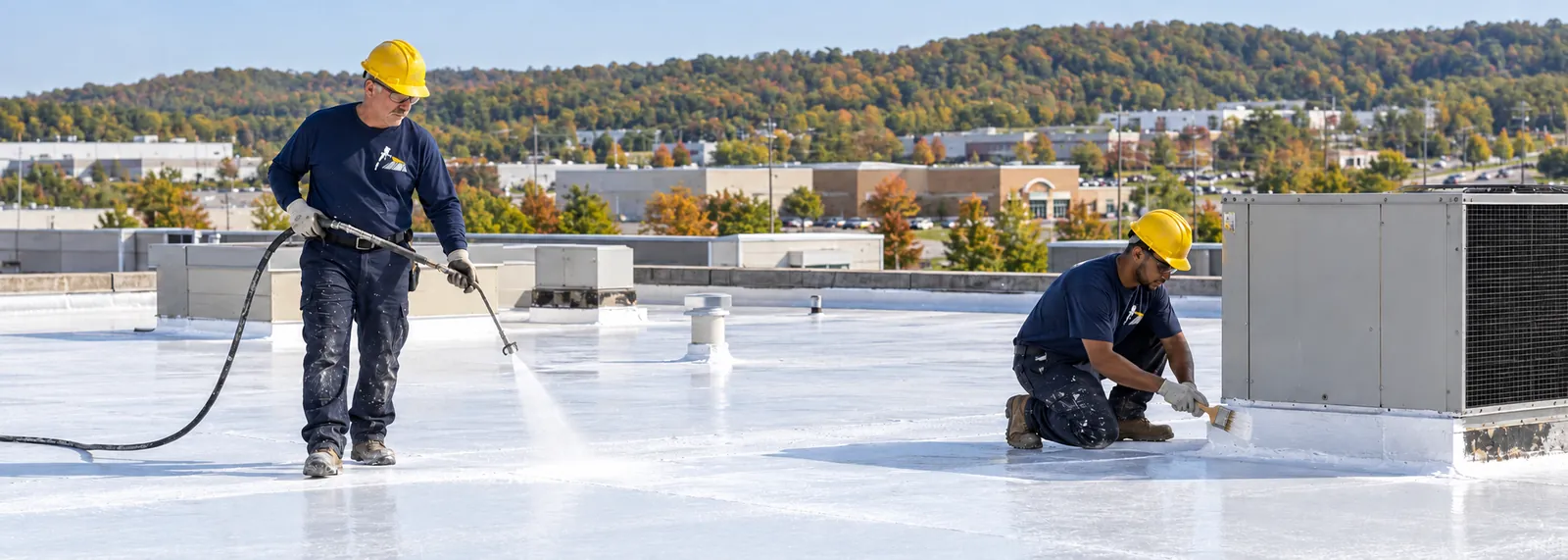
Low-slope metal that holds water at end laps and gutters often gets a silicone topcoat in place of acrylic, since silicone resists ponding.
Silicone coating for wet low-slope roofs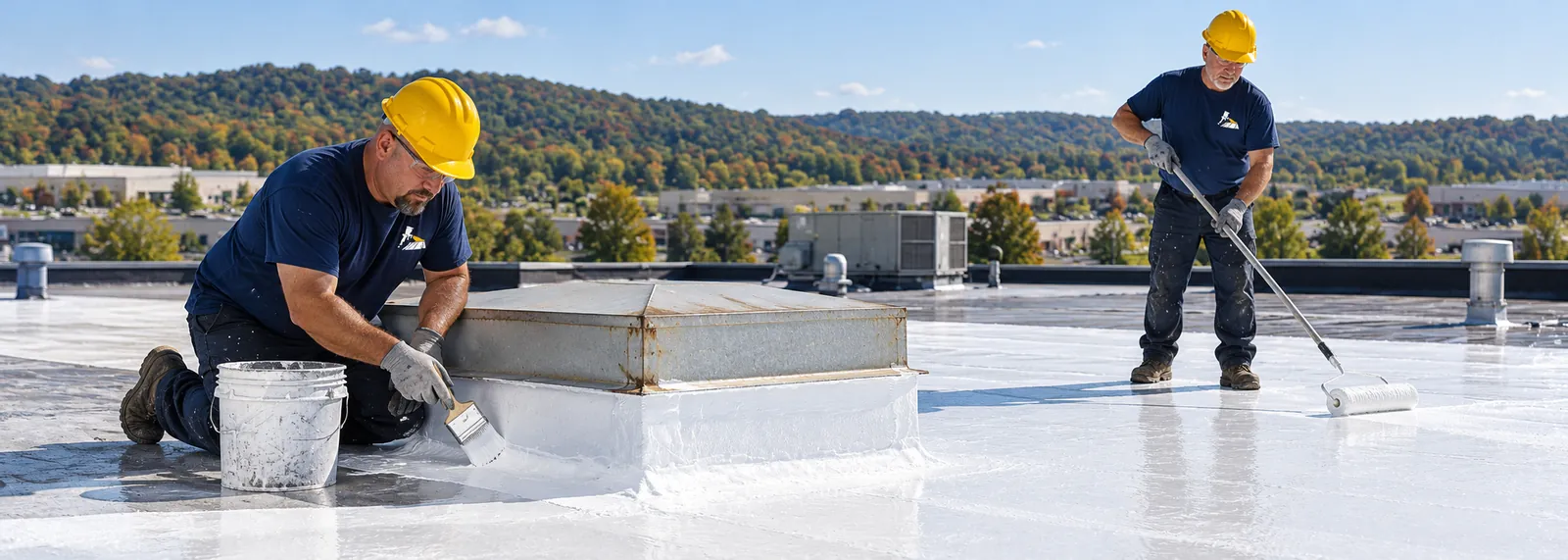
Pitched panels that drain within hours take acrylic well, and acrylic recoats are simple when the roof needs refreshing.
Acrylic coating for pitched panels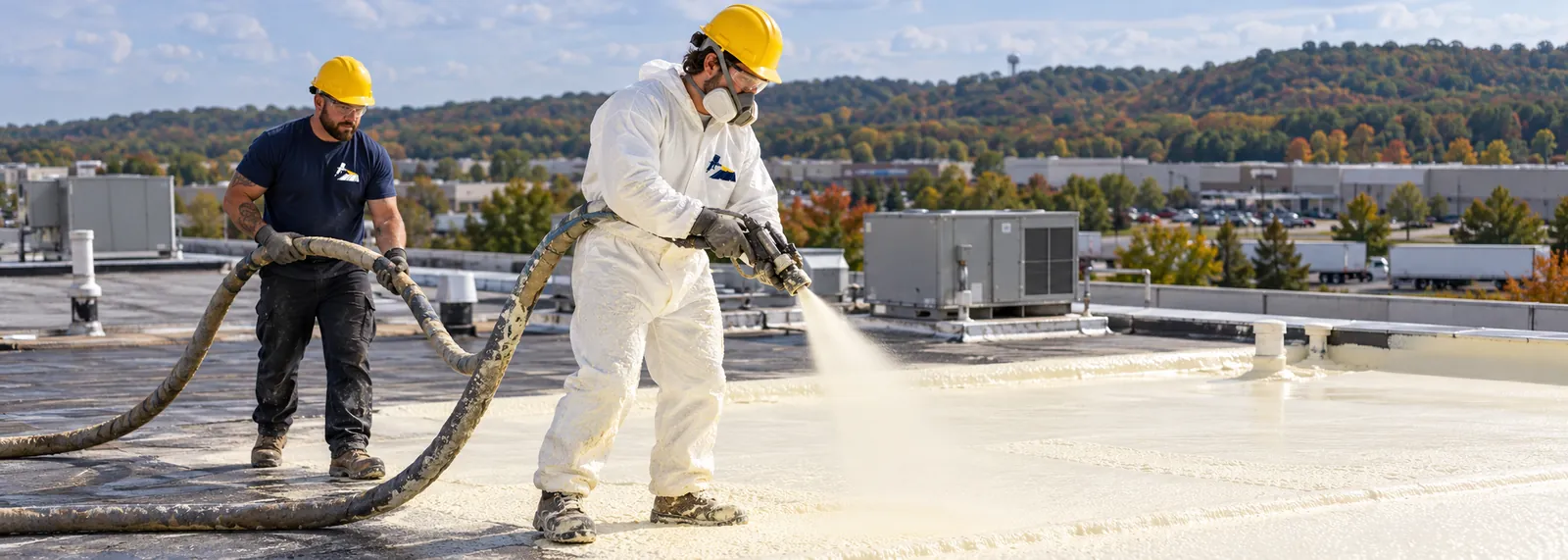
Shops that run too hot or too cold under the deck can add foam over the steel, then a coating on top.
Spray foam over steel panelsAnswers about panels, screws, and rust on Florence commercial roofs.
Roofs with solid panels, light to moderate surface rust, and screws that still grip the purlins. That covers most R-panel, PBR, corrugated, and standing seam roofs on warehouses, shops, and churches.
Rust holes, sagging panels, wet insulation, and screws spinning across the roof move a building toward panel work first, and a moisture check sorts that out.
Rust is cleaned, treated, and primed first, since coating over loose rust traps it under the film. After a pressure wash, flaking areas are brushed or ground to tight rust or bare steel.
Primer goes on heavier at end laps, gutters, and skylight edges. Galvanized panels with white rust get a zinc-matched primer, and holes get a metal patch.
Washers dry out and crack, and screws back out as panels expand and shrink with the weather. Each cycle loosens them a little more until water runs down the shank.
During restoration we check every screw, replace loose ones with a larger size, and seal the heads before coating.
Only the failed ones. Screws that still bite stay in place under sealant and coating, because pulling a tight screw leaves a bigger hole than it fixes. Stripped or spinning screws come out, and an oversize screw with a fresh washer goes in the same spot.
Yes, once the ridge cap is secured. Loose ridge screws are tightened or replaced, the foam closures are checked, and the overlap gets the same fabric or tape used on the end laps before the full coat covers it.
Foot traffic waits until the topcoat cures, and the product sheet sets that time by temperature and humidity. Service techs get marked paths and walk pads near units so later traffic stays off the fresh film.
Use the seven-question estimate for a ballpark range, or call to book an inspection of your Florence metal roof.
Leave a name and number and we will call you back about your commercial roof.
Or call (859) 204-8080 now