Condensation Drip
Cold panels over warm, humid air sweat on winter mornings. Water then drips onto equipment or runs along purlins, and it can look like a roof leak.

We coat metal roofs on pole barns, equipment sheds, and shop buildings in Union, starting inside, where condensation rusts open-purlin roofs from below.
On open-purlin buildings around Union, the first look at a metal roof happens from the floor, under the panels.
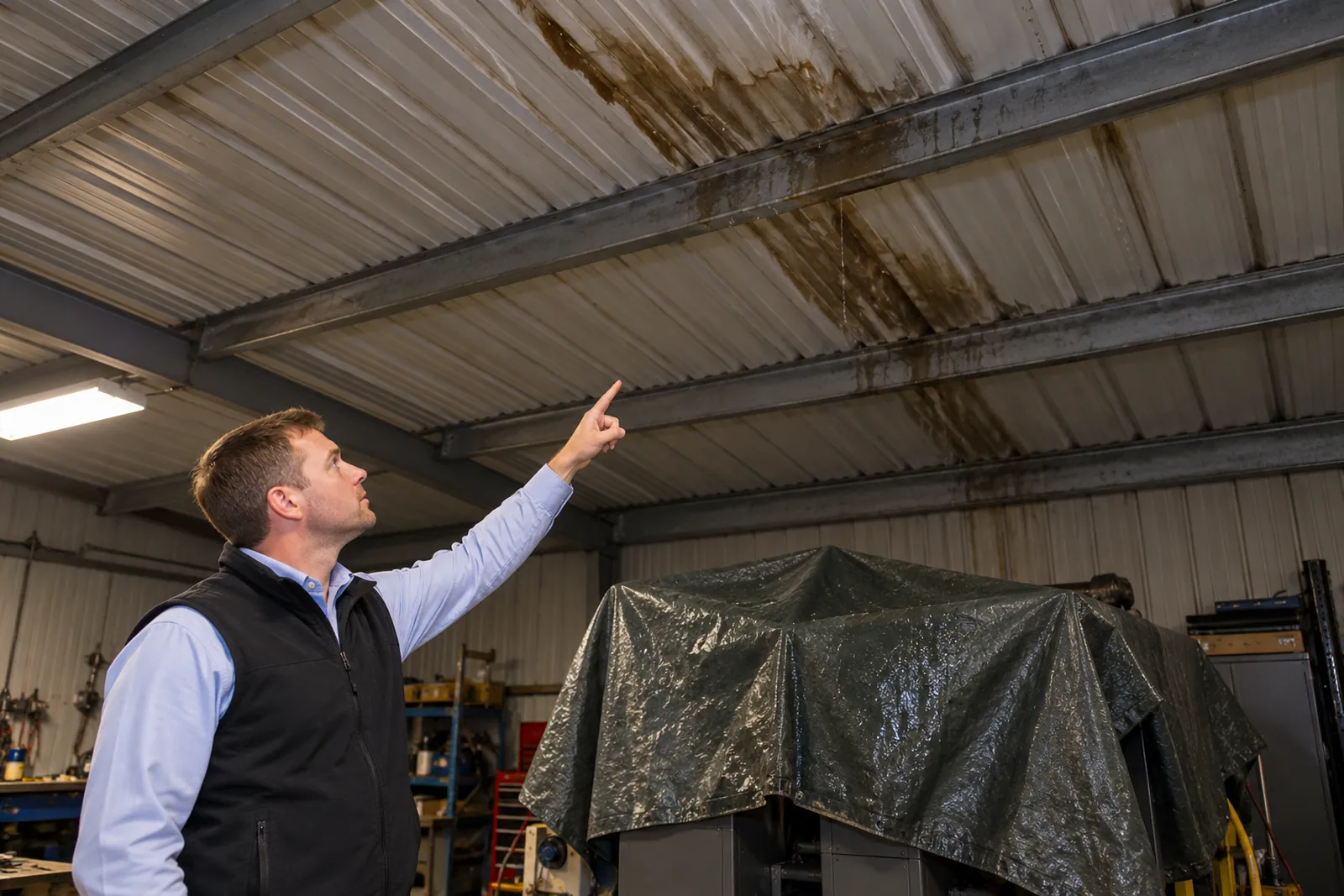
Pole barns, equipment sheds, and shop buildings around Union usually carry exposed-fastener steel with no insulation under it. In cold weather, warm air inside meets the cold panels and condenses, then drips back down or rusts the steel from below.
That leaves two kinds of water to sort out before coating: rain getting in at screws and laps, and condensation forming under the roof. A coating on top handles the first. The second needs ventilation, and sometimes insulation, from inside.
Farm and shop roofs wear differently from warehouse roofs. These six show up most on open-purlin steel buildings around Union.
Cold panels over warm, humid air sweat on winter mornings. Water then drips onto equipment or runs along purlins, and it can look like a roof leak.
With no insulation below, panels rust from inside as well as outside. End laps rust from both faces and thin fastest.
Livestock and hay barns rely on a vented ridge to move moist air out. Coating work keeps those gaps open, sealing only the cap screws and laps.
Screws into wood purlins loosen as the wood dries and shrinks. Oversize screws or new fastening points go in before coating.
Open buildings catch wind under the eaves and gable trim. Trim screws and panel edges get checked and refastened along every open side.
Many shop and barn roofs drain straight off the eave. Where water splashes against siding or doors, gutters or drip edges get planned before the coat.
Four changes Union owners see when a farm or shop roof gets restored and coated after the condensation question is settled.
Re-roofing a pole barn means stripping panels over equipment, hay, or stock.
Coating keeps the existing panels and works over the top while the barn stays in use.
Rain and dew sit on bare, chalked steel and feed rust at every lap.
Primed laps and a continuous coat keep water off the top surface of the steel.
Dark or faded panels heat the air above stored equipment and animals.
A white coating reflects sunlight and cools the panels themselves.
Replacement adds tear-off, disposal, and new trim on every side.
Restoration money goes into screws, laps, and coating on the existing steel.
Five systems we apply on Union buildings, from barn roofs to shop fronts.
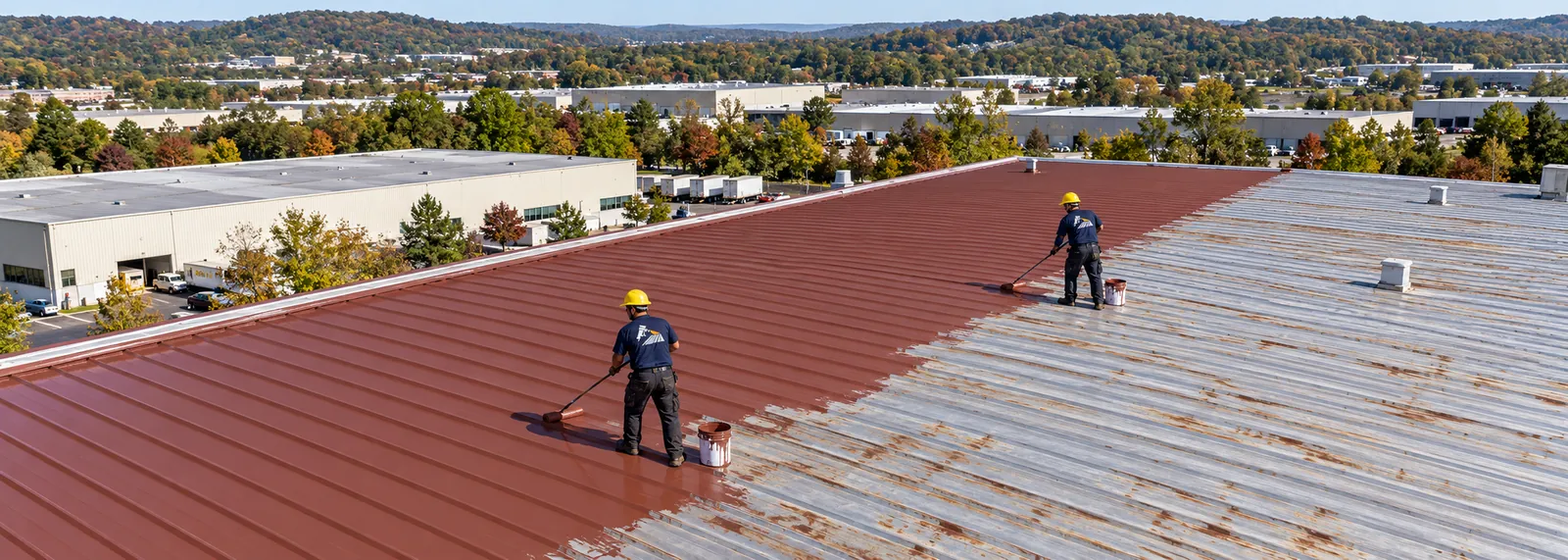
Pole barns and shops with exposed-fastener steel get screw, lap, and rust work, then a full coat.
Metal roof coating details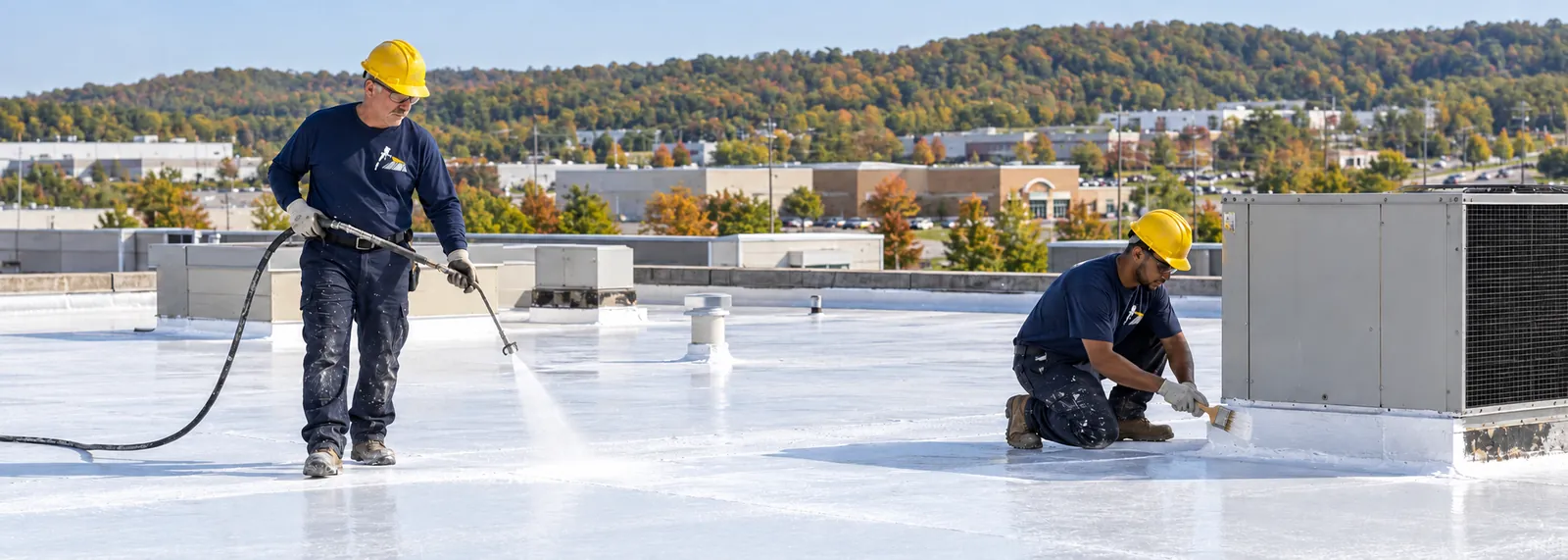
Low-pitch lean-tos and shed additions that hold water after rain take silicone at their laps and field.
Silicone roof coating details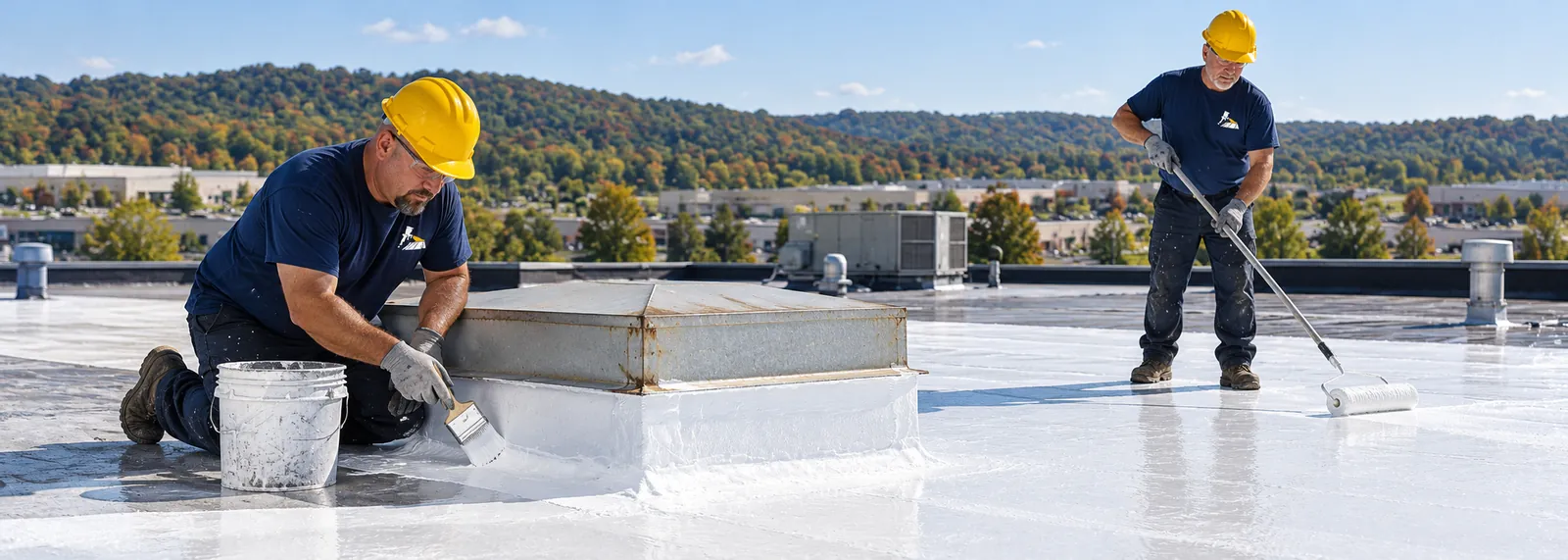
Steeper barn roofs that shed water quickly fit acrylic, with simple recoats later.
Acrylic roof coating details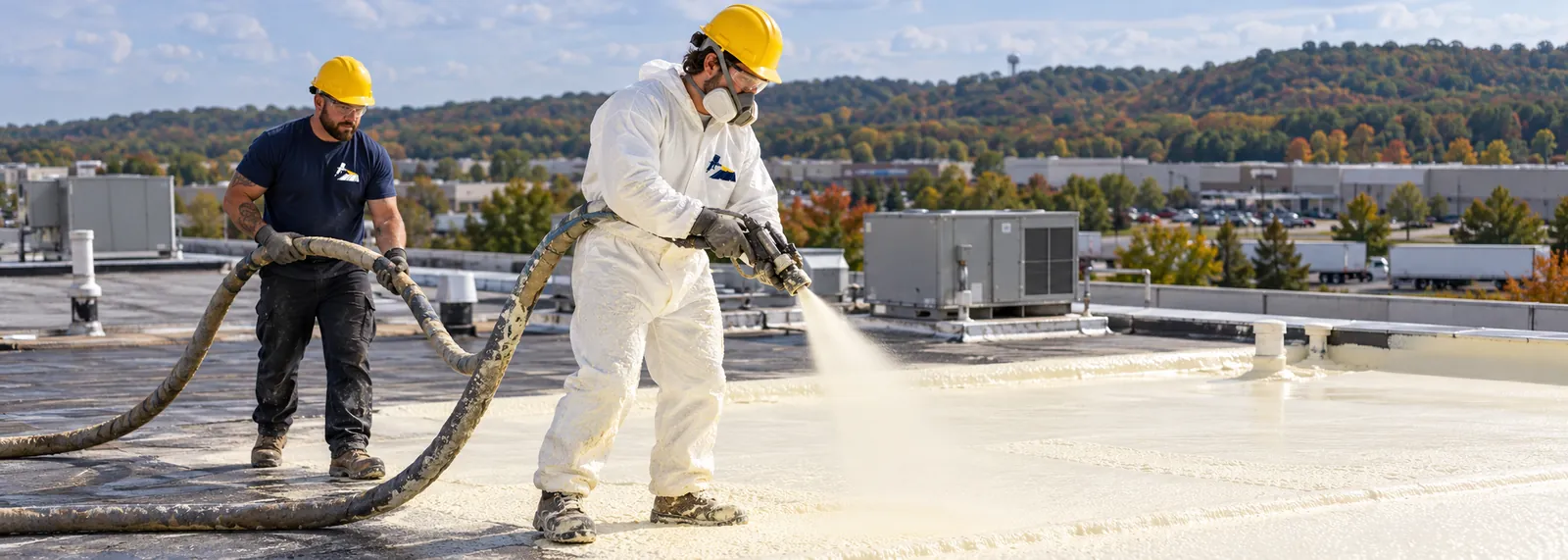
Heated shops that drip condensation can add foam over the steel for insulation, then a topcoat.
Spray foam roofing details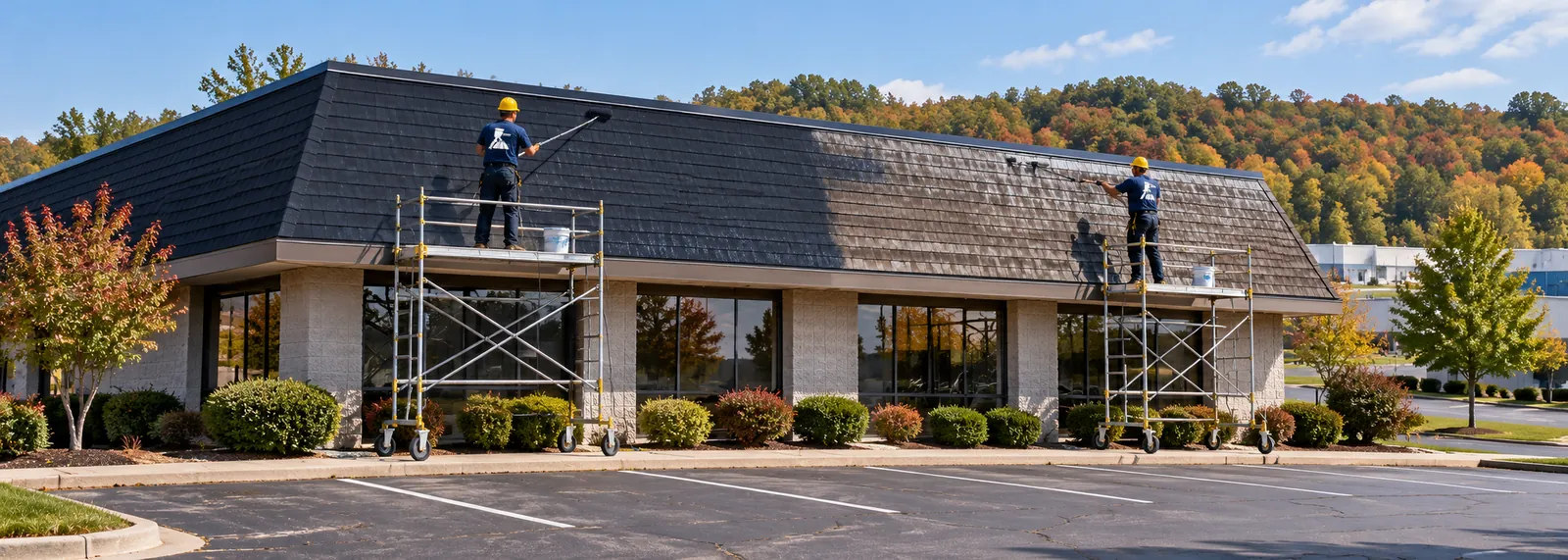
Farm offices and shop fronts with shingle slopes get a shingle condition check first.
Shingle roof coating detailsCall and describe when it drips. Water after rain points to the roof; water on clear, cold mornings points to condensation, and the fix is different.
Five steps on Union farm and shop buildings, with the inside look done first.
We look up from inside for underside rust and drip lines, then walk the panels to test screws, laps, the ridge cap, and the eave trim.
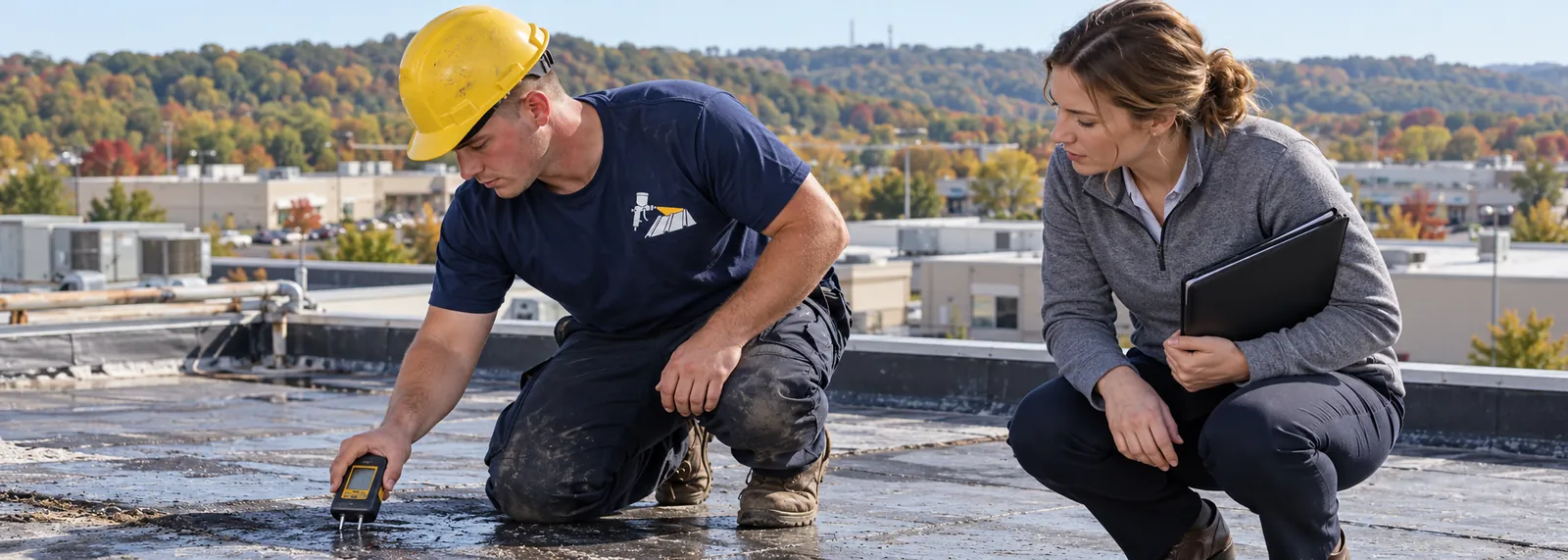
A pressure wash clears dirt and chalk, and rust on the top surface is graded panel by panel, then brushed to firm steel.
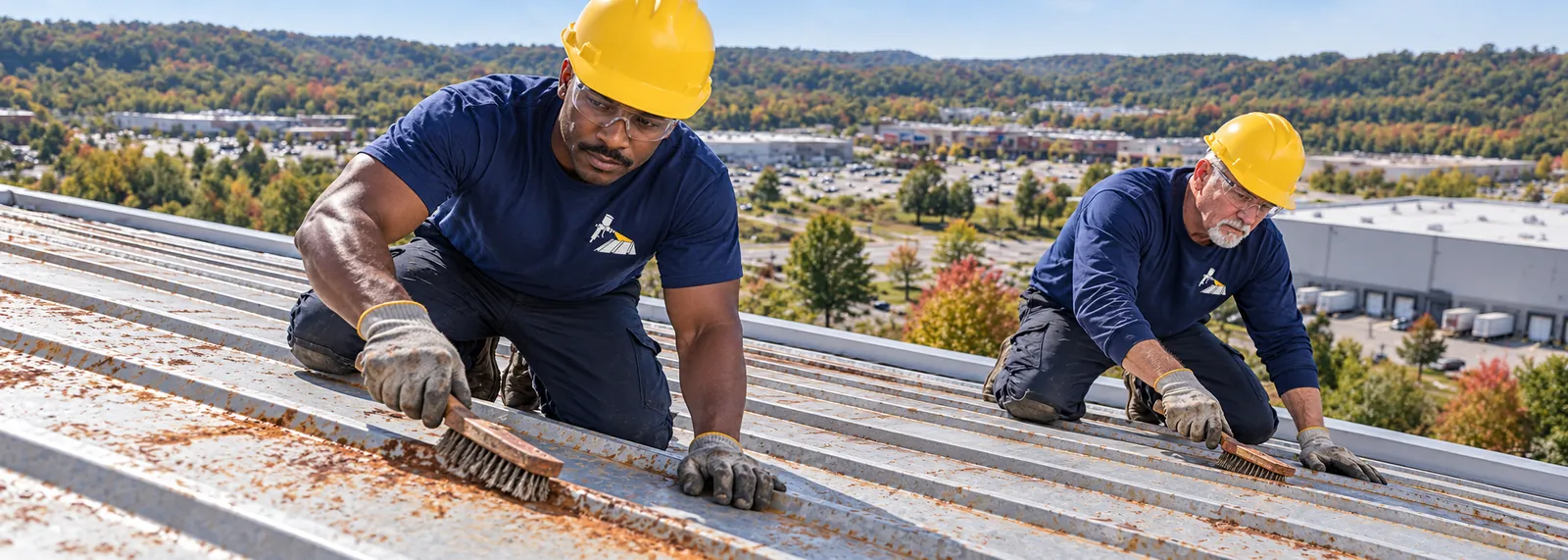
Loose screws in drying wood purlins get oversize replacements or new fastening points, and laps and the ridge cap get sealed while vents stay open.
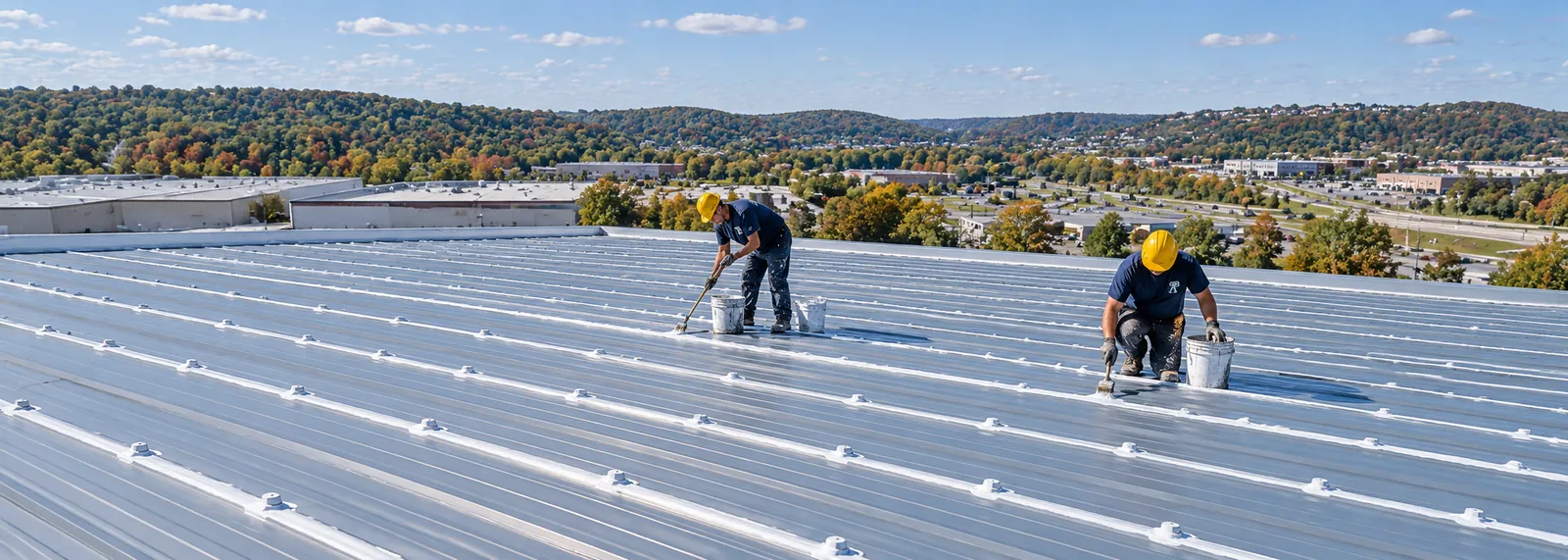
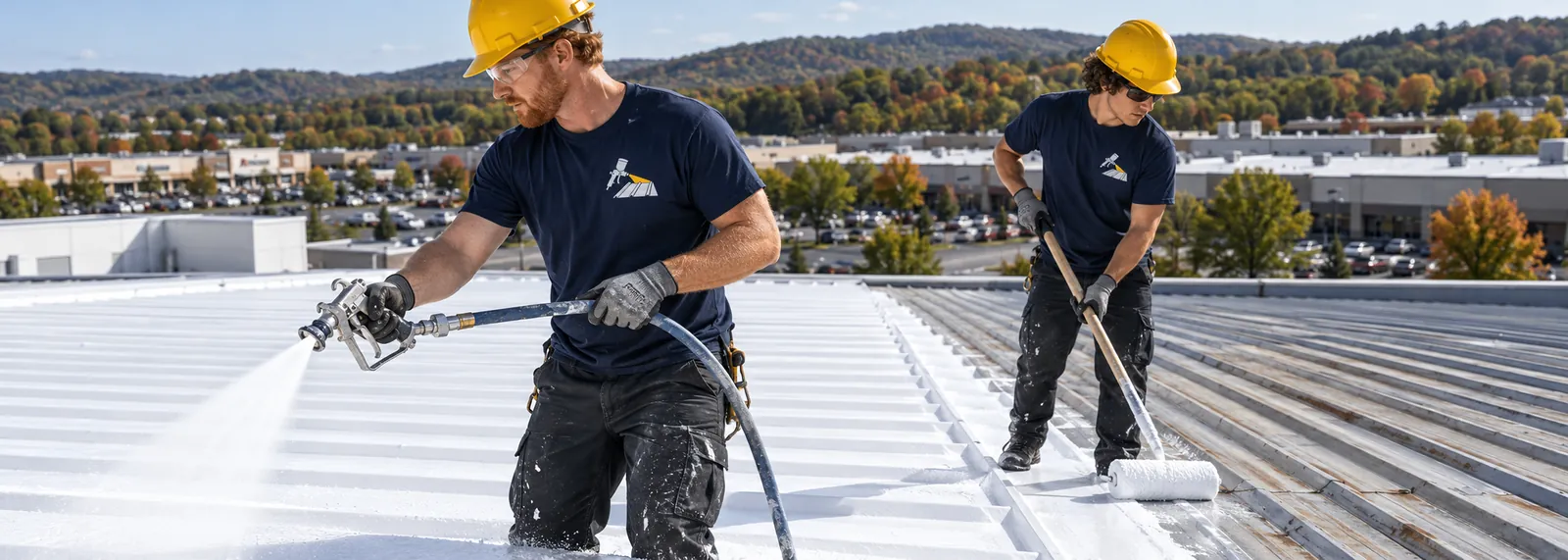
Primer goes on rust spots, then the coating goes on in calm weather, with equipment and vehicles below moved or covered.
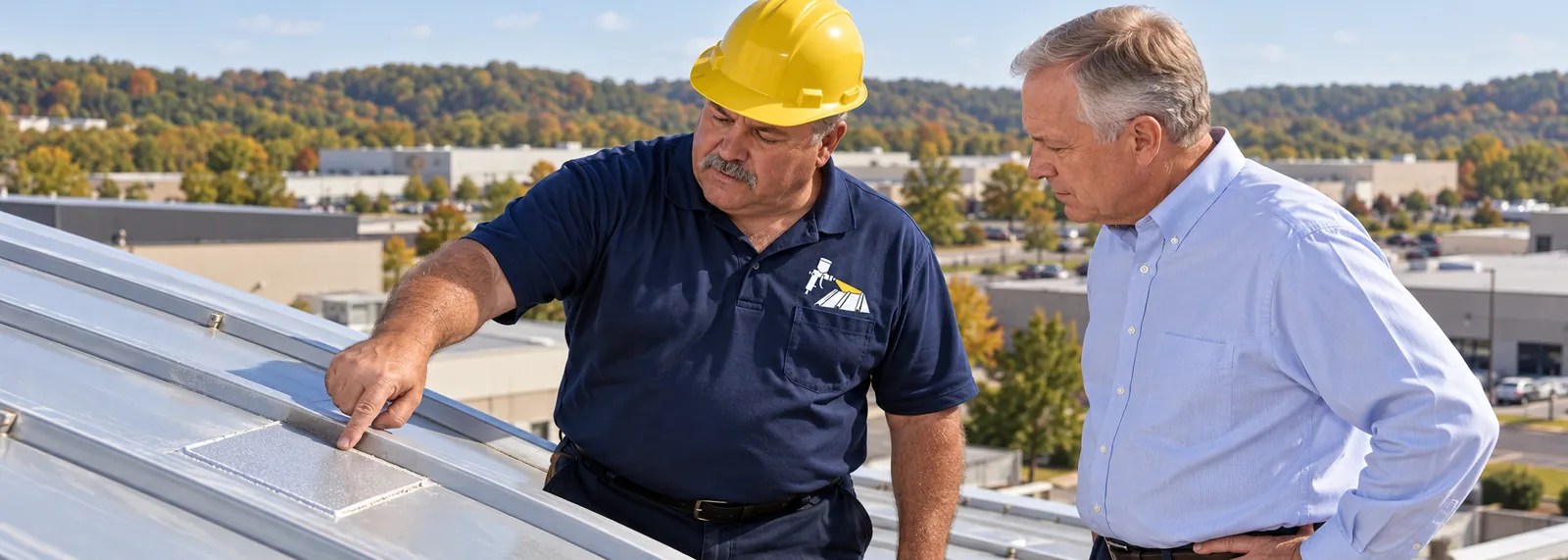
A final walk covers the ridge vents, trim, and any skylight panels, with notes on ventilation changes inside if condensation was part of the problem.
Does your building sit in one of these towns instead? We coat commercial roofs across all of them. For anywhere else, call us or send us a message.
| Town | County | What We See On Roofs There |
|---|---|---|
| FlorenceMain Service City | Boone | Warehouses, flex buildings, and retail centers with exposed-fastener roofs, plus tenant changes that bring a county permit and a city fire inspection. |
| Burlington | Boone | Older shop buildings with matching roof and wall panels, rust along the eave line, and gutters pulling loose. |
| Hebron | Boone | Very large logistics and air cargo roofs near CVG, coated in sections around docks and sorting floors. |
| Warsaw | Gallatin | Shops, churches, and warehouses where river fog and heavy dew keep panels wet into the morning. |
Answers for owners of barns, sheds, and shops around Union.
Union is an incorporated city, yet its building permits and inspections run through the Boone County Building Department, the same office that covers Florence and Walton. The state contact sheet for Boone County lists one inspector entry for all three cities.
Call the county office about permits for panel replacement, spray foam, or flashing changes at walls and curbs.
Start inside. Pole barns and shop buildings with open purlins and no insulation drip condensation in cold weather and rust from the underside, so the inspection looks up as well as down.
Owen Electric serves parts of Boone County, so co-op members check with the cooperative before work around roof-mounted equipment, and barns with livestock or hay keep their ridge vents open.
Yes, with planning. Work happens on top of the panels, and spray days are chosen for calm air so mist stays on the roof. Ridge vents stay open throughout, and noisy steps like screw replacement can be scheduled around feeding and chores.
Coating stops rain coming in from above, while condensation forms below the panels and needs its own fix. Ventilation at the ridge and eaves, or insulation such as spray foam over the steel, addresses the dripping.
They do. Wood purlins shrink as they dry, which loosens screws over time. Some screws go up a size or move to a new spot in solid wood, and any purlin with rot is repaired before coating.
Answer seven questions for a ballpark range, or call to set up an inside-and-out roof check in Union.
Leave a name and number and we will call you back about your commercial roof.
Or call (859) 204-8080 now