Screw Rows At Purlins
Exposed-fastener panels carry a screw at every purlin crossing, so a single roof holds thousands. Loose ones get swapped and every head gets sealant.

We apply acrylic roof coating to pitched metal roofs in Florence that drain quickly, scheduled for warm, dry weather and prepped at every lap, screw, and skylight.
Place your roof on each line. The yellow dot shows where acrylic goes straight on, the navy diamond where repairs come first, and the open dot where another system or new panels fit better.
Roofs that dry within hours take acrylic, slow spots get repairs or crickets first, and roofs holding water for days are better served by silicone or foam.
Steeper panels shed water and fit acrylic, moderate pitches need careful lap work, and nearly flat panels move toward silicone.
Light rust bloom is primed and coated, heavier rust at laps is ground and patched first, and holes through laps call for new sheets.
Bare steel and old acrylic take new acrylic, peeling layers come off first, and an existing silicone layer means staying with silicone.
Occasional visits leave acrylic on its own, while busy service paths around units get a tougher urethane base under the acrylic.
The inspection confirms slope, drainage, and the existing surface before acrylic is chosen.
Pitched metal roofs fail at a short list of details. Each of these gets fixed before the acrylic base coat goes on.
Exposed-fastener panels carry a screw at every purlin crossing, so a single roof holds thousands. Loose ones get swapped and every head gets sealant.
Foam closures at the ridge and eave keep wind-driven rain out of the panel ribs. They shrink and crumble with age and get replaced before coating.
Translucent panels sit in the same lap pattern as the steel, and their laps open first. Each gets resealed, replaced, or covered before the coat.
Zinc-coated panels form white rust where dew sits. It needs washing and a zinc-matched primer, or acrylic lifts off in patches.
Standing seam panels hide their clips, so leaks show up at seam ends, the ridge, and transitions. Prep there keeps the seams free to move.
Acrylic is water-based and needs the steel and air above its minimum cure temperature into the night. Heavy dew can wash a fresh coat off before it sets.
Acrylic shows up in several setups on Florence pitched roofs. Traffic, color needs, and the existing surface set the choice.
| Setup | Best On | Layers | Recoat Path |
|---|---|---|---|
| Acrylic over primed steel | Exposed-fastener R-panel and PBR | Rust primer, lap fabric, acrylic base and top | Acrylic after cleaning |
| Acrylic on standing seam | Concealed-clip panels | Seam-end detailing, acrylic base and top | Acrylic after cleaning |
| Urethane base with acrylic top | Roofs with walkways and busy units | Urethane at seams, screws, and paths, acrylic on top | Acrylic over the top layer |
| Colored acrylic | Roofs seen from the street | Same layers in tan, gray, or another color | Matching acrylic color |
Four results Florence owners see when acrylic goes onto a pitched metal roof in the right weather.
Silicone and new panels both cost more per square foot of roof.
Acrylic carries a lower material cost on roofs that shed water fast enough to use it.
Faded panels absorb sun and heat the space under the deck.
White acrylic reflects sunlight, and cooler panels move less at screws and laps.
Old coatings of mixed types make later work harder to plan.
Acrylic accepts another acrylic coat after cleaning when the surface wears.
Replacing pitched panels means exposed bays and staging around the building.
Acrylic goes on over the existing panels while work continues inside.
Call with a rough count of rusty laps and skylights. Surface rust is the best stage to prime and coat a pitched metal roof.
Five steps, timed around the weather, because acrylic needs warm, dry conditions from the first coat through the last.
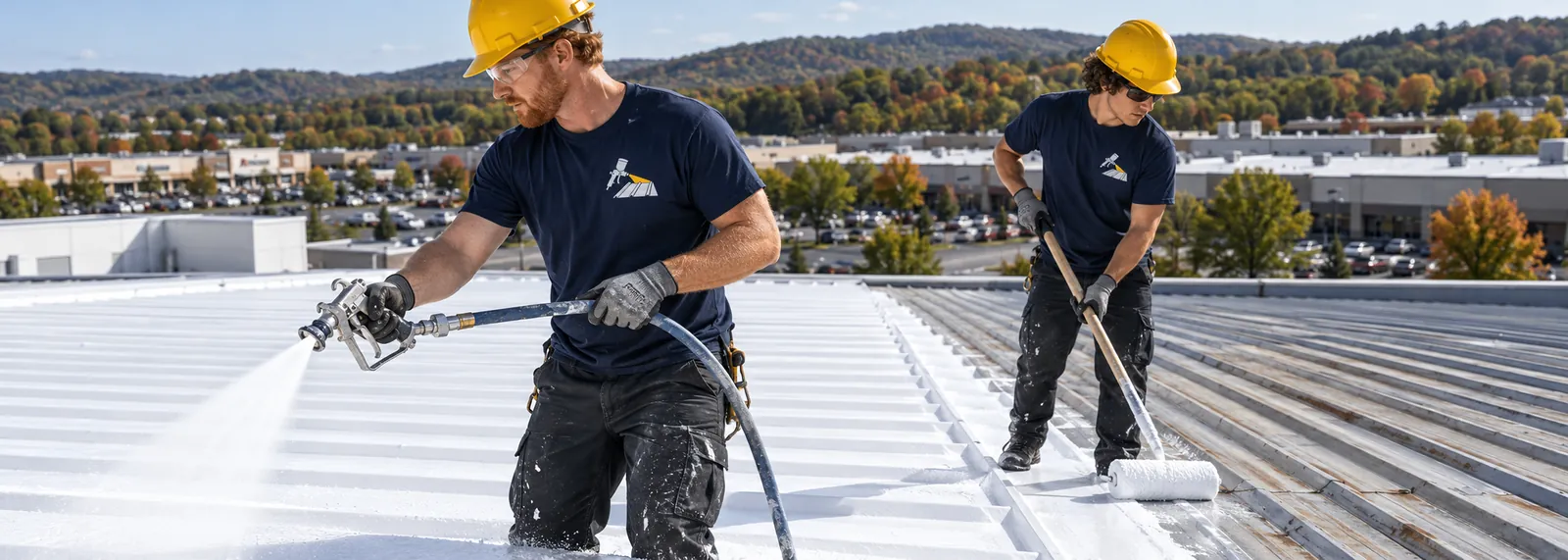
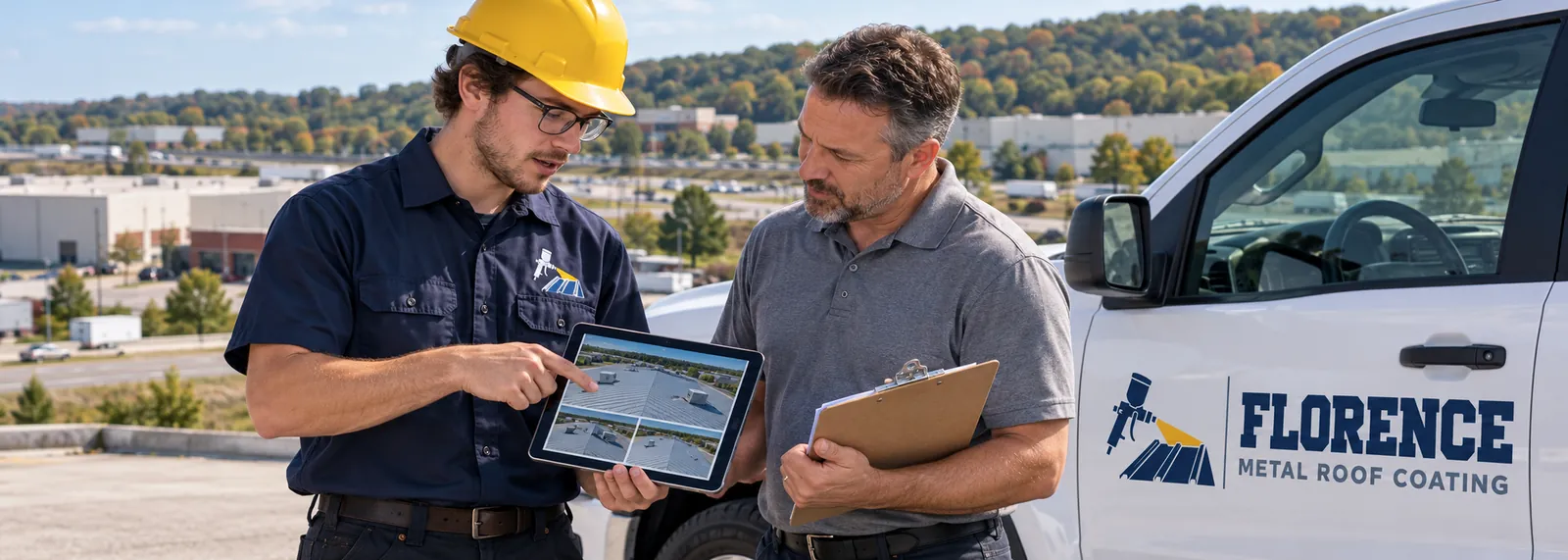
We confirm the pitch drains fast, test screws, grade rust, and note every skylight and closure. A check of the existing paint shows whether acrylic will bond.

Pressure washing removes chalk and dirt. Rust spots are brushed to firm steel, then primed, and white rust on galvanized panels gets a zinc-matched primer.
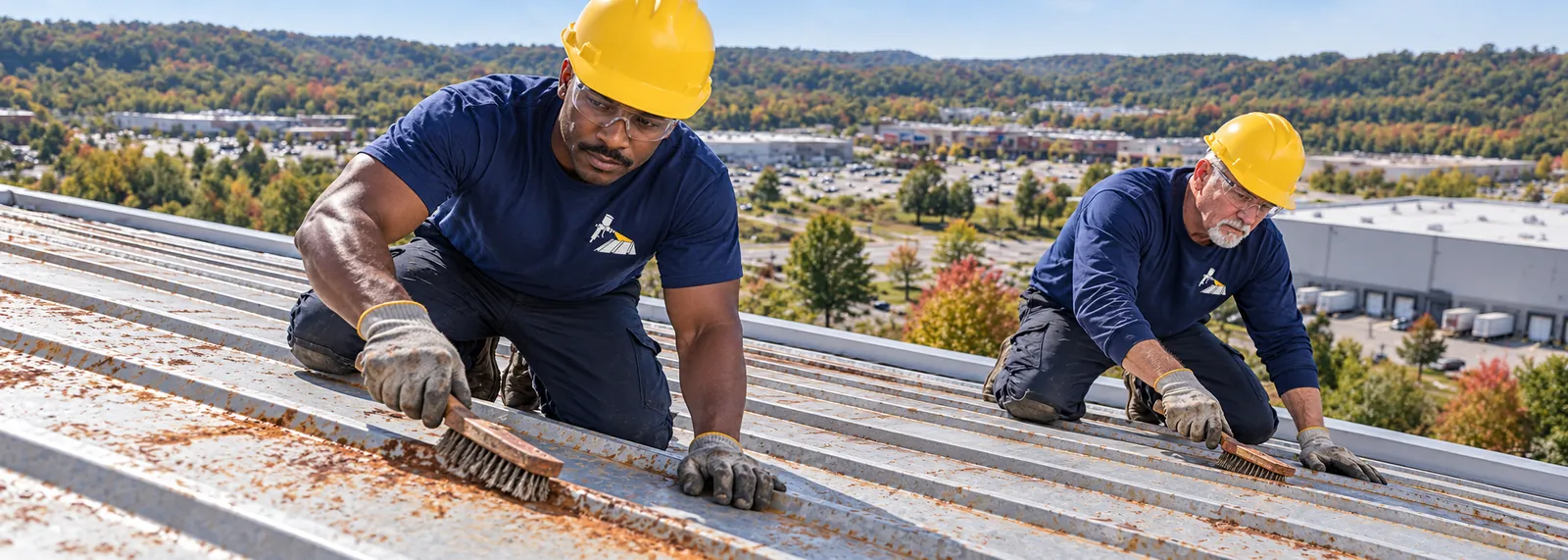
Loose screws are replaced, heads are sealed, and side laps, end laps, and closures get fabric or tape so the acrylic film never has to bridge an open joint.
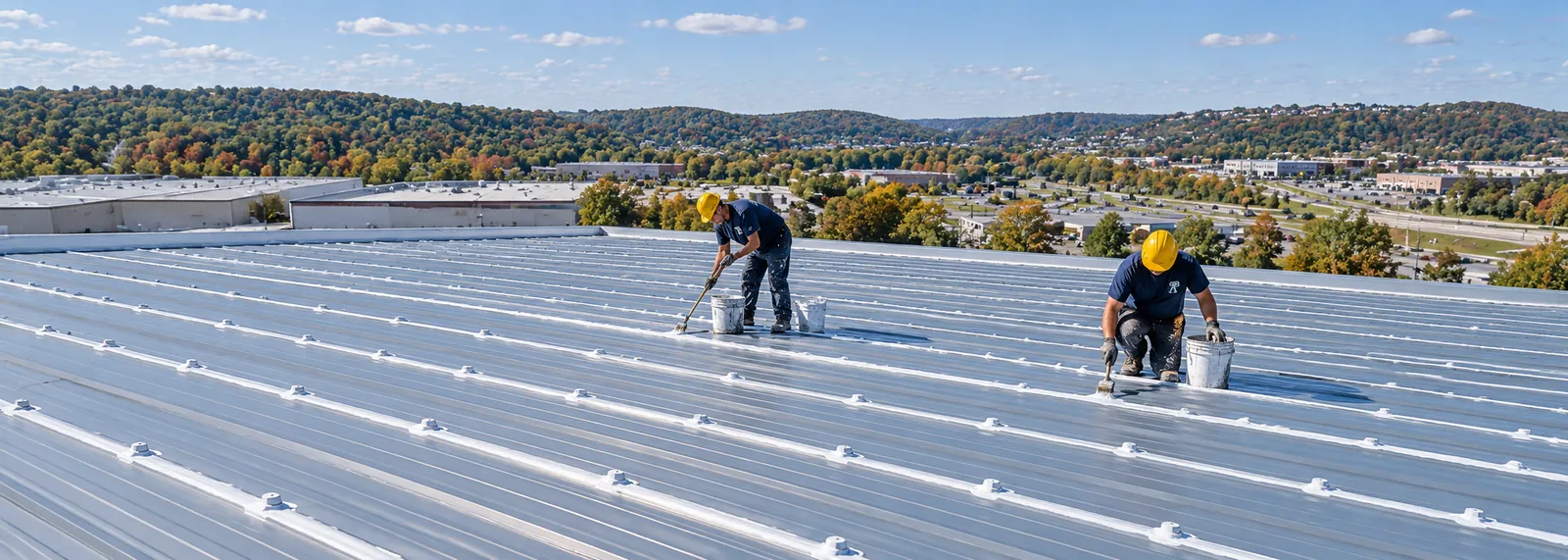
Crews watch overnight lows, rain, and dew points, and plan each coat for a stretch of warm, dry days and nights so the acrylic cures before moisture reaches it.
Base and top coats go on by spray or roller to the product sheet's thickness, with a cure period between them. The white or colored topcoat finishes the roof.
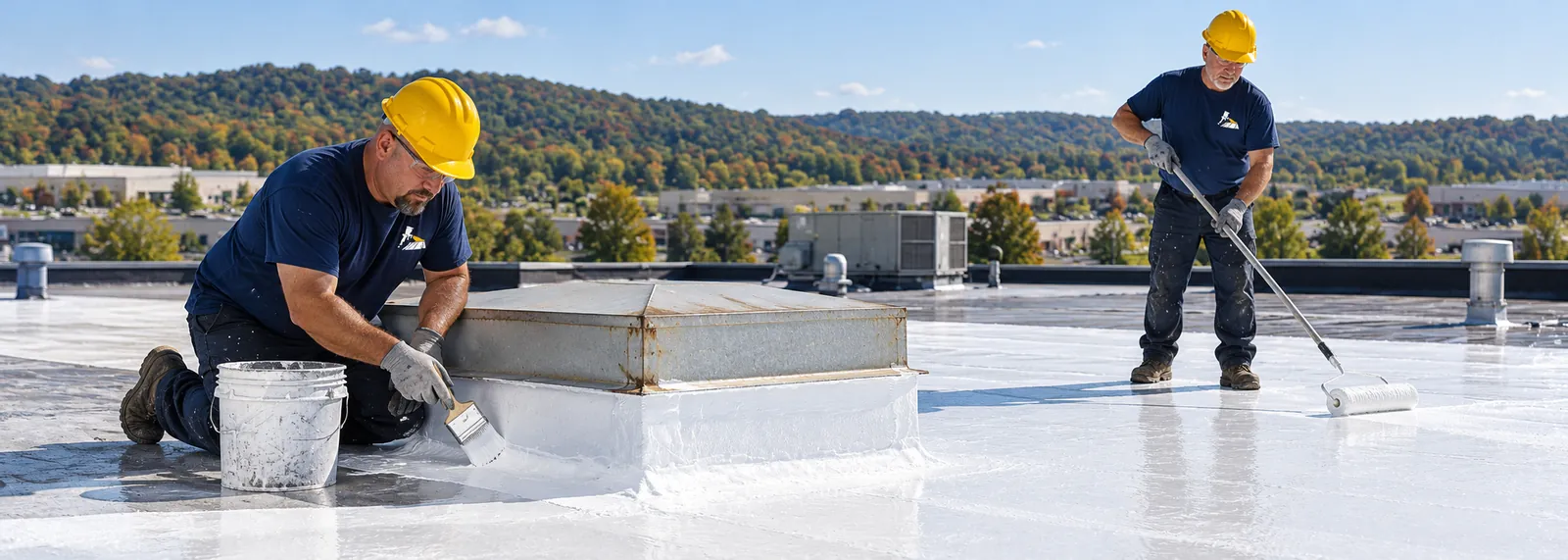
Florence roofs that fall outside acrylic's best range often fit one of these.
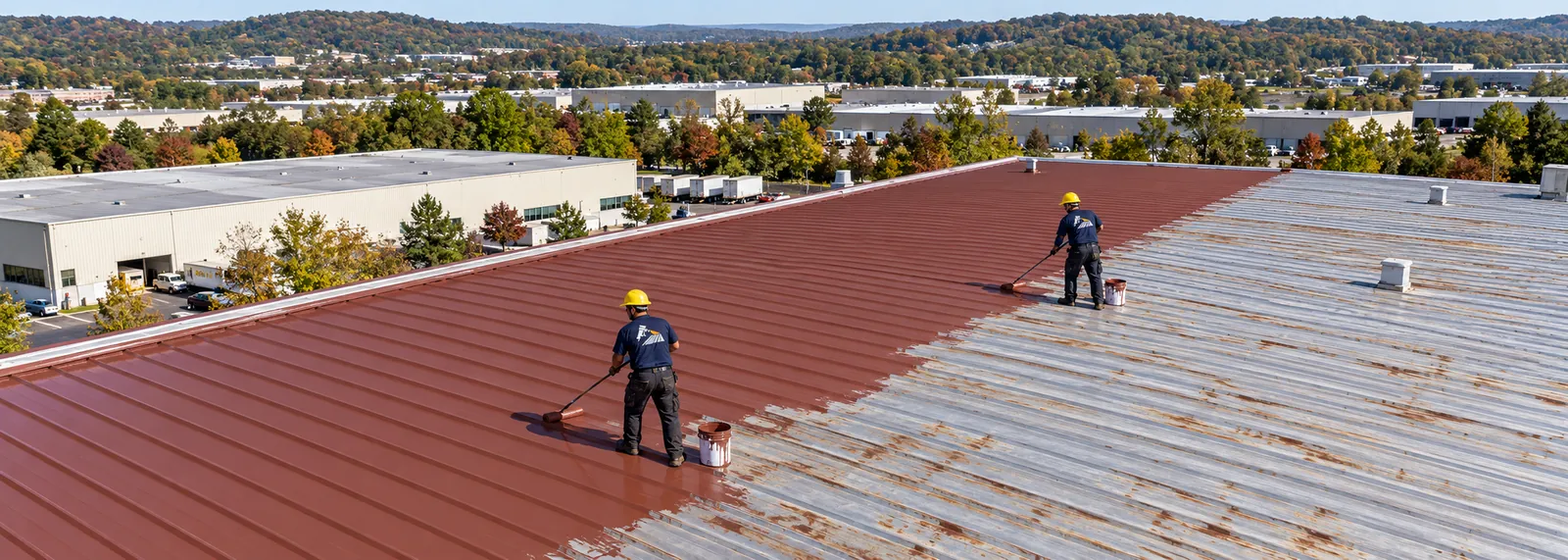
Heavy rust at laps and many failed screws turn a simple acrylic job into full restoration work.
Full metal roof restoration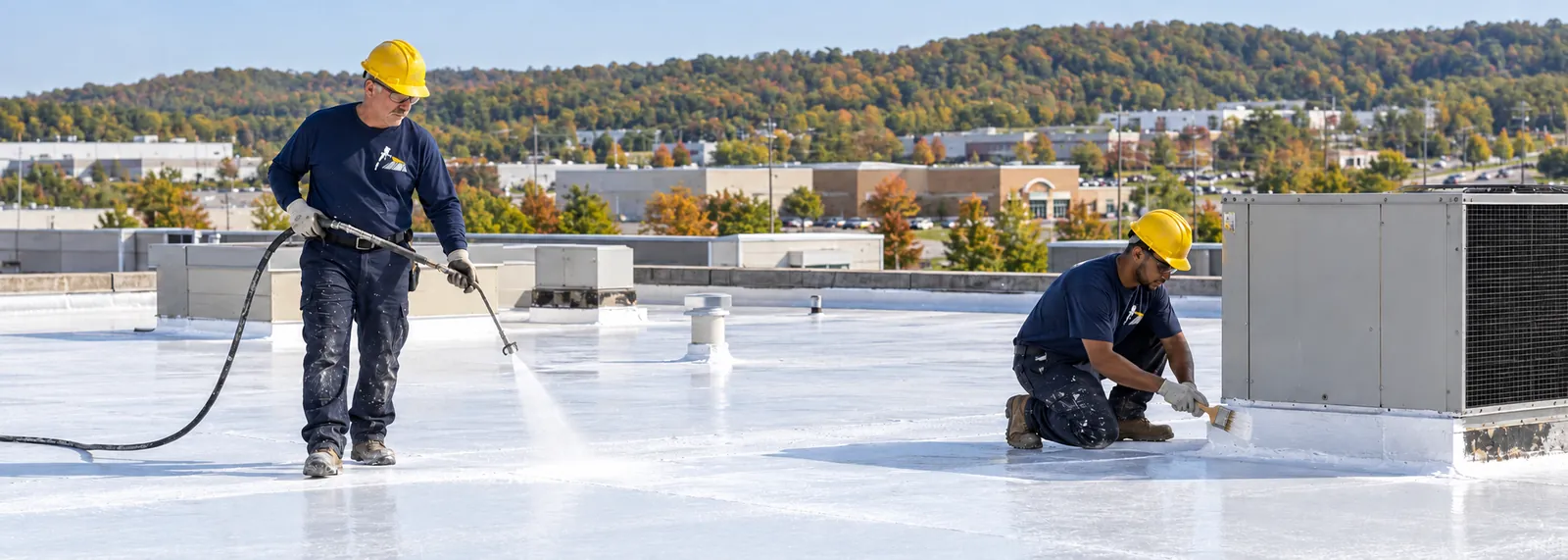
Low-slope panels where water lingers after rain do better under silicone than acrylic.
Silicone for wet low-slope roofs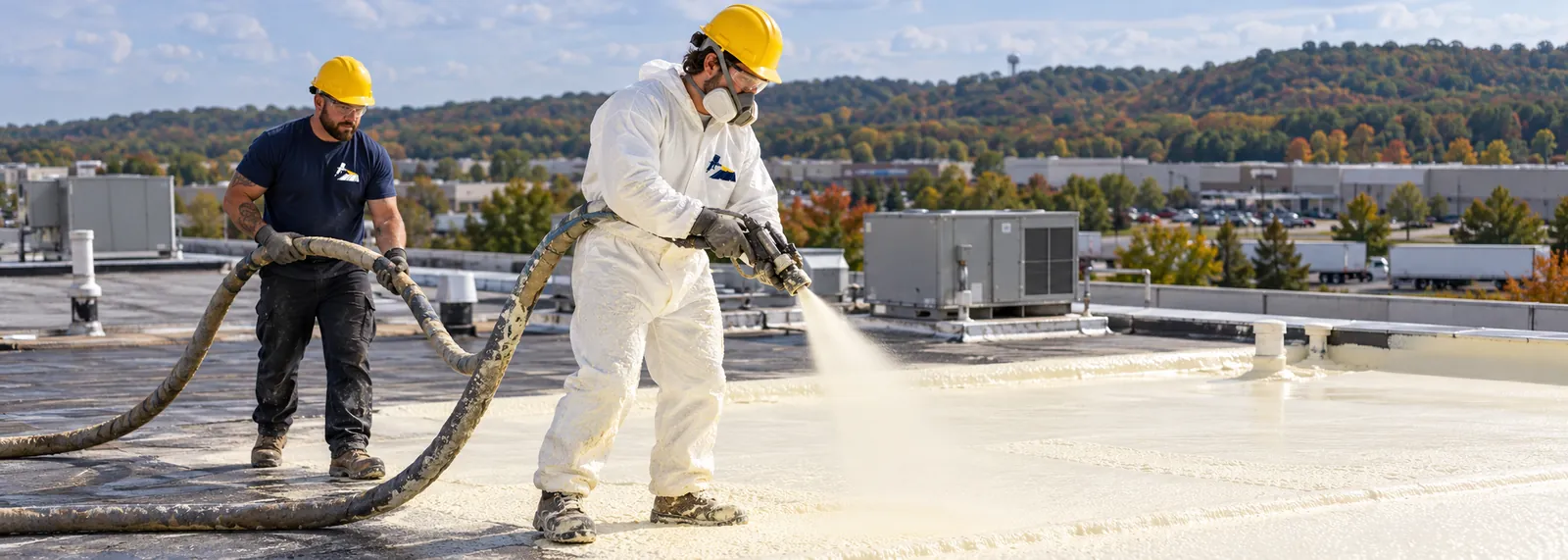
Buildings that need more insulation under the coating can add foam over the panels first.
Spray foam with a coating topcoatAnswers about acrylic on pitched metal roofs around Florence.
Yes, because standing seam hides its clips under the seams while R-panel puts every screw on the surface. On standing seam, leaks show up at seam ends, the ridge, curbs, and transitions.
R-panel prep centers on screw replacement and lap reinforcement, and it takes far more detail time. Standing seam panels slide on their clips, so the coating plan leaves the seams room to move.
Urethane comes in where roofs see foot traffic, impact, or busy rooftop equipment, since it cures harder than acrylic or silicone. It often goes on as a base at seams and screws or as a tough layer at walkways and unit curbs.
Any stack of products follows the maker's tested system, so every layer stays compatible with the acrylic on top.
White reflects the most sunlight and keeps panels coolest, which eases movement at screws and laps. Tan, gray, and other colors fit roofs seen from the street or trim that needs matching, though they run warmer.
The Cool Roof Rating Council directory lists tested reflectance and emittance values, which helps compare products before choosing.
Early fall works when days and nights stay above the product's minimum cure temperature and the forecast stays dry. Once cold nights and heavy dew settle in, acrylic work on the roof waits for spring or switches to a system that tolerates cooler weather.
Recoat timing comes from the yearly roof walk. When the film thins over ribs and screw heads or starts to chalk, a cleaning and a fresh acrylic coat restore it before steel shows through.
Acrylic softens under water that sits, so slow spots get fixed first. A clogged gutter is cleared, a low spot near a curb can get a small cricket, and a roof with widespread ponding moves to silicone.
Get a ballpark range in seven questions, or call to schedule a pitched-roof inspection before the next warm, dry stretch.
Leave a name and number and we will call you back about your commercial roof.
Or call (859) 204-8080 now